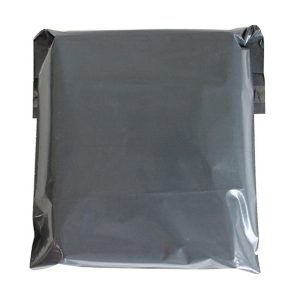
Certification should be the starting point when evaluating certified compostable mailers. Buyers need to identify the applicable standard, confirm that the certificate covers the exact material or construction being purchased, understand the intended treatment route, and then verify that storage and shipping performance still meet the packaging requirement.
The value of custom eco friendly poly mailers rests on verifiable material claims as well as dependable packing and shipment performance. Certified compostable mailers still require stable extrusion, printing, conversion, inspection, corrective action, and delivery control.
A compostability claim does not replace functional testing; the selected construction still has to protect the item and reproduce the approved appearance at order volume. Print approval should confirm that the surface treatment and ink system are compatible with the selected compostable material and film construction.
Separating Compostable and Recycled Claims
Recycled-content and compostability claims describe different environmental attributes and require different supporting evidence. The category should instead be evaluated according to the specific compostability claim and the treatment route covered by its supporting evidence.
Product selection should separate recycled content, recyclability, and compostability because these are different material and end-of-life claims. For compostable mailers, artwork approval should include color references, print position, tolerances, plate details, and an agreed method for judging variation.
WH Packing can support environmentally oriented mailer programs, but a statement of certified compostability should be made only when the exact certified material and supporting certificate are available for the selected construction. Without that evidence, the certification status should remain unclaimed until the applicable standard, certificate scope, and material construction are verified.
Accurate procurement details still include film construction, strength, waterproofing, printing, size, closure, order volume, and the exact material specification covered by the environmental claim. Risk in a compostable packaging project falls when this issue is addressed: MOQ and lead time depend on material sourcing, printing setup, dimensions, colors, and the number of variants in the program.
The specification should separate mandatory performance and certification requirements from preferences that can be traded against price or lead time. Acceptance of the selected construction should be based on evidence that film thickness, resin blend, bag dimensions, and seal geometry provide the required puncture resistance and usable load.
Opacity and surface finish affect privacy, barcode readability, and the visual contrast of printed artwork. A cross-functional compostable packaging review benefits from one shared observation: Drawings, samples, and acceptance criteria reduce the chance that commercial language will be interpreted differently after ordering.
Performance Requirements Still Apply
Quality evidence is more useful when it can be traced to the same configuration and production conditions proposed for the order. Rub, adhesion, and light-exposure tests address different aspects of print performance and should not be treated as interchangeable.
Functional performance remains necessary even when the end-of-life claim is well documented. Seal integrity, tear and puncture resistance, storage stability, and realistic packing trials answer questions that a compostability certificate does not. Treating certification and package performance as separate evidence streams keeps the evaluation technically clear.
Certification also needs to remain connected to the exact construction being ordered. A certificate that applies to one material route or formulation should not automatically be treated as evidence for another film structure. Buyers can therefore record the applicable standard, certificate scope, material specification, and intended treatment route alongside the functional requirements for the mailer.
Storage behavior also deserves attention because a compostable construction still has to remain suitable during warehousing, packing, and shipment before reaching its intended end-of-life route. Keeping these records together makes it easier to distinguish verified environmental attributes from the separate tests used to confirm sealing, strength, and shipping performance.
For compostable packaging, a controlled sample provides an initial validation reference, but it does not prove that every future batch will behave identically. Gauge reduction should be considered only after tear, seal, puncture, and transit performance remain acceptable.
Comparing material options works best when the same product, load, gauge, and test conditions are used throughout. That common basis shows whether a compostable construction changes sealing, strength, or packing behavior. It also prevents a favorable environmental claim from masking a functional difference that matters during fulfilment or transit.
Documenting Environmental Packaging Decisions
Bag dimensions should still follow the folded product and required clearance because excess space adds movement while tight corners concentrate stress. Environmental evidence should remain tied to the exact material, dimensions, and construction being supplied.
When buyers compare custom eco friendly poly mailers, the specification should identify the material route, the supporting certificate or environmental claim, and the functional tests used for the approved construction. Keeping those elements together makes later orders easier to verify against the approved construction and environmental evidence.
A retained sample, batch identity, and relevant test results give later orders a useful point of comparison. Compostability is an end-of-life property assessed under specified conditions, whereas shipment protection, storage stability, print performance, and sealing require their own checks. The two types of evidence should remain connected but not confused.
At closeout, WH Packing and the buyer should retain the approved material specification, relevant test results, and evidence supporting the environmental claim. These records can then be used to verify certification scope and packaging performance in later orders.
