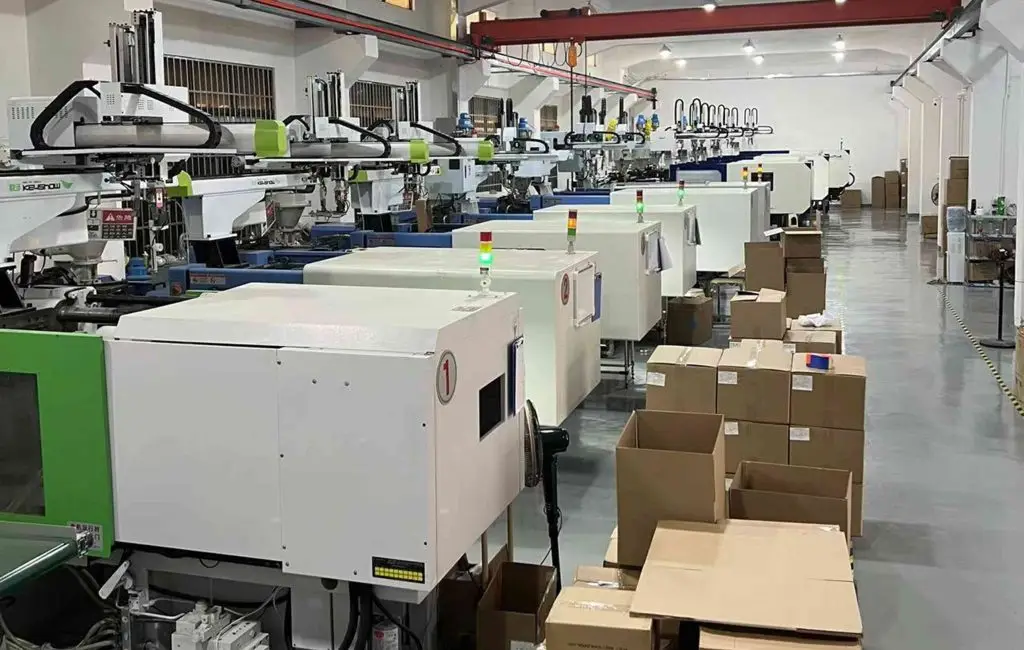
The right electronics supplier should match the needs of the product, not just the target price. When companies compare China electronics manufacturers, they should look at engineering support, prototype capability, production scope, quality processes, communication, and flexibility. These factors can affect development time and production results long after the initial quotation has been accepted.
The selection process should also reflect the product’s current stage. A new concept may need design support and prototypes, while a tested product may need stable assembly and larger production capacity. Knowing these differences makes supplier comparisons more practical.
Define the Project Before Contacting Suppliers
A clear project brief gives manufacturers the information they need to assess a product. It can include product functions, estimated dimensions, expected quantity, target market, and development stage.
Technical documents are also useful. Depending on the project, a supplier may need schematics, PCB files, BOMs, drawings, firmware requirements, or prototype samples.
Without clear requirements, quotations from different manufacturers can be difficult to compare. One supplier may include engineering work, while another may quote production only.
What Engineering Support Is Available?
Engineering support matters when a product is still being developed. A design that works in testing may require changes before it is suitable for repeated manufacturing.
Companies should ask whether the supplier provides DFM evaluation, PCB-related engineering, structural support, or other development services. They should also understand when engineers become involved in the project.
For startups and design firms, this support can be useful when internal engineering resources are limited. It can also help established companies manage a new product without creating a separate manufacturing engineering team.
Prototype Capability Shows More Than a Sample
A prototype allows engineers to examine the actual product rather than relying only on drawings or simulations. It can reveal problems with dimensions, component placement, assembly, or product functionality.
Rapid prototyping is useful when a project needs several design revisions. Each version can provide feedback before the product moves toward larger production quantities.
When comparing suppliers, companies should ask how prototype changes are documented and how the results are transferred into production. This helps connect early development work with later manufacturing requirements.
Compare the Full Production Scope
Price comparisons become more meaningful when the scope of service is clear. A supplier may provide PCBA production only, while another may also handle enclosure manufacturing, assembly, testing, and packaging.
Companies should identify which processes are included in the quotation. Tooling, component sourcing, testing, and packaging may need separate consideration depending on the project.
A broader manufacturing scope can also reduce the number of separate suppliers involved. This may simplify communication when a product contains both electronic and mechanical components.
Does Production Flexibility Match Demand?
Production volume can change during a product’s lifecycle. A project may begin with prototypes, move to a small trial run, and increase production after market feedback.
For this reason, companies should discuss production flexibility before selecting a supplier. The manufacturer should understand the expected development path rather than only the first order.
No MOQ requirements may also be relevant to early-stage projects. Smaller quantities can give businesses more room to test a product before making larger production commitments.
How Should Quality Control Be Evaluated?
Quality control should cover the complete production process. PCB assembly, enclosure manufacturing, final assembly, and product testing can each affect the finished unit.
Companies can ask how incoming materials are checked, how assembly quality is inspected, and what testing is performed before shipment. They can also ask how production problems are recorded and addressed.
Clear quality procedures are especially important for products with several components and manufacturing stages. A supplier should be able to explain its process in terms that the customer can review and understand.
Communication Can Affect Project Results
Supplier communication is easy to overlook during the initial selection process. It becomes much more important once engineering changes or production issues appear.
Companies should identify who will handle technical questions, sample approvals, production updates, and quality discussions. A clear communication process can reduce delays when specifications change.
Document control also matters. BOM revisions, drawings, firmware versions, and test requirements should be tracked carefully so that different teams are working from the same information.
A Practical Example of Supplier Scope
A company that needs development and manufacturing under one workflow may look for a supplier with capabilities across several stages. Minewing is based in Shenzhen, China, and has more than 20 years of experience in electronics manufacturing. They support startups and global brands from initial prototyping to mass production.
Their stated services include PCB design, PCBA production, enclosure design and manufacturing, assembly, testing, and packaging. They also offer OEM, ODM, and JDM cooperation models. This combination can be relevant to businesses that need both product development and manufacturing support.
The company also states that its services have no MOQ requirements. For early-stage projects, this can provide another option when production quantities are still being evaluated.
Which Cooperation Model Fits?
The cooperation model should reflect how much development work the customer needs. OEM can be suitable when the customer already has a defined product design and needs manufacturing support.
ODM may be considered when a company needs more assistance with product development. JDM provides another model for projects where the customer and manufacturer share development responsibilities.
Before choosing a model, companies should clarify ownership of designs, engineering responsibilities, revision procedures, production requirements, and communication channels.
Questions to Ask Before Production
A supplier evaluation should end with specific questions rather than a general impression. Companies can ask about prototype lead times, DFM reviews, production capacity, testing, sourcing, quality control, and packaging.
They should also confirm which manufacturing processes are performed internally and which involve outside suppliers. This gives the project team a clearer understanding of the production chain.
For businesses comparing a China electronics manufacturers supplier, these details can provide a stronger basis for evaluation than price alone.
When Should a Supplier Be Reconsidered?
Supplier evaluation does not necessarily end after the first production order. A project may change significantly as quantities increase or new product versions are developed.
A company may need to reassess the supplier if production requirements change, new components are introduced, or additional engineering support becomes necessary. Quality performance and communication should also remain part of the review.
This is particularly relevant for products that are expected to develop over several production cycles. A supplier that fits an early prototype project may have different capabilities from those required for later production.
Choosing Based on Product Fit
Selecting an electronics manufacturer in China is a comparison of capabilities, responsibilities, and project requirements. The quoted unit price is only one part of that assessment.
Minewing provides OEM, ODM, and JDM services alongside product development and manufacturing support. They describe their workflow as covering the path from prototyping to mass production, which may suit businesses looking for connected development and manufacturing services.
For companies researching China electronics manufacturers, a useful final step is to compare suppliers against the same checklist: engineering support, prototype capability, production scope, quality control, communication, flexibility, and commercial terms. A supplier that fits the actual product requirements can make the path from design to production easier to manage.
