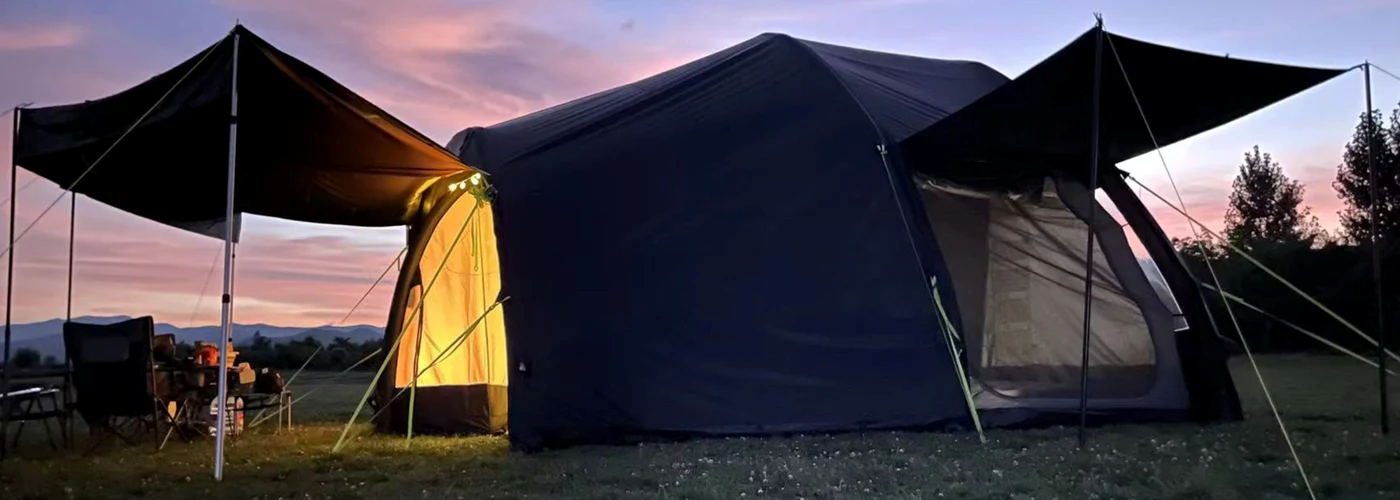
An outdoor living room can turn a basic campsite, backyard, or recreational property into a more comfortable gathering space. With the right shelter, seating, lighting, storage, and layout, an outdoor area can support dining, conversation, relaxation, and longer stays while maintaining a connection with nature. Thoughtful equipment selection is the key to making the space practical rather than simply decorative.
Start With the Right Outdoor Shelter
The shelter is the foundation of an outdoor living room because it defines the usable area and provides protection from changing weather. Depending on the location, users may choose a large camping tent, a spacious family shelter, or another temporary outdoor structure that provides enough room for furniture and movement.
Size should be determined by the intended number of users and activities. A space designed for four people relaxing around a table has different requirements from one intended for larger family gatherings. Sufficient headroom and floor space can make the area easier to furnish while preventing the interior from becoming crowded.
When consumers buy tents online, they should compare dimensions, materials, ventilation, setup requirements, and intended applications rather than choosing primarily according to appearance. A suitable shelter should work with the site’s environment and the planned furniture arrangement.
Define Functional Zones
An outdoor living room works best when different activities have clearly defined areas. Instead of placing every item randomly inside the shelter, users can divide the available space into zones for seating, dining, storage, and movement.
A central table can become the focus of social activities, while chairs or low seating can be arranged around it. A separate corner can hold bags, blankets, cookware, or other frequently used items. Keeping these functions visually and physically organized makes the space easier to use.
Circulation should also be considered. There should be enough room for people to move between the entrance, seating areas, and storage without constantly shifting furniture.
Choose Comfortable and Practical Seating
Seating has a direct influence on whether an outdoor living room feels inviting. Folding chairs are useful for portability, while lightweight benches or camping stools can provide additional flexibility. Cushions and outdoor textiles can also improve comfort when conditions permit.
Furniture should match the shelter’s dimensions. Oversized pieces may reduce usable floor space, while too many small chairs can make the area feel cluttered. Buyers should also consider how furniture will be transported and stored between trips.
For temporary installations, lightweight and foldable options are generally easier to manage. The objective is to create a comfortable environment without making the entire camping setup difficult to transport.
Use Lighting to Extend Usable Hours
Lighting can transform an outdoor living area once daylight begins to fade. Rather than relying on a single bright source, several low-intensity lights can create a more balanced environment.
Hanging lights can illuminate a central table, while small lamps can mark storage areas or entrances. Battery-powered or rechargeable systems are convenient for mobile camping because they reduce dependence on fixed electrical infrastructure.
Lighting placement should also account for safety. Cables should not cross major walking paths, and equipment should be protected according to its intended outdoor use. A carefully planned lighting arrangement can improve both functionality and atmosphere.
Build a More Organized Storage System
Storage is often overlooked when creating an outdoor living room. Without designated spaces for personal belongings and camping supplies, even a large shelter can quickly become crowded.
Storage boxes, organizers, and hanging solutions can help keep frequently used items accessible. Heavier equipment can remain near the ground, while lighter accessories can be placed in upper storage areas where appropriate.
The broader category of outdoor camping equipment should therefore be considered as a coordinated system. Shelters, seating, lighting, cooking accessories, and storage products all contribute to how efficiently an outdoor living space functions.
A consistent storage layout also makes setup and breakdown easier because users know where each item belongs.
Improve Comfort Through Ventilation
Comfort depends not only on furniture but also on the indoor environment. Several people sharing one shelter can quickly increase heat and humidity, especially during warm weather.
Ventilation openings and windows can help maintain airflow while reducing condensation. Furniture should be positioned so that it does not block important ventilation areas.
During cooler conditions, users may want to reduce unnecessary drafts while still maintaining appropriate airflow. The right balance depends on the shelter, weather, number of occupants, and activity taking place inside.
Good ventilation also contributes to a more pleasant environment when the living room is used for several hours at a time.
Preparing for Weather Changes
Outdoor living spaces need to remain functional when conditions change. Rain may require additional protection for furniture and equipment, while wind can affect shelter stability and loose outdoor items.
Before setting up, users should evaluate drainage, ground conditions, and potential wind exposure. Furniture should be placed so it does not interfere with entrances, anchor points, or emergency movement.
Weather-resistant covers can help protect cushions and other items between uses. When severe weather is expected, equipment should be secured or stored rather than relying on the shelter alone.
Creating a Flexible Space for Different Activities
An effective outdoor living room should be adapted to different occasions. During the day, it may serve as a dining area, while in the evening it can become a place for conversation, reading, or relaxation.
Modular furniture makes these transitions easier. Folding tables can be moved aside, while stackable chairs can create additional open space when needed. A flexible layout is particularly useful for families and groups with changing schedules.
THECATAL focuses on outdoor equipment and practical outdoor use, providing a useful reference for thinking about how shelter and equipment can work together as an adaptable recreational environment.
Maintain Space for Long-Term Use
Regular maintenance helps keep an outdoor living room comfortable and ready for the next use. Tents should be cleaned and dried properly, while furniture, lighting equipment, zippers, seams, poles, and connection points should be inspected periodically.
Storage conditions also matter. Fabric and cushions should not remain damp for extended periods, and electronic equipment should be stored according to manufacturers’ recommendations.
A simple maintenance routine reduces the likelihood that small issues will interrupt future trips or outdoor gatherings.
Designing a More Functional Outdoor Living Room
Creating an outdoor living room is ultimately about combining shelter, comfort, organization, and flexibility. A suitable structure provides the foundation, while seating, lighting, storage, ventilation, and thoughtful layout turn the space into an area people can genuinely use. By selecting equipment based on real activities and site conditions, campers can create an outdoor environment that feels organized and welcoming. THECATAL exemplifies how functional outdoor products can build comfortable, flexible living areas that go well beyond standard campsite setups.
