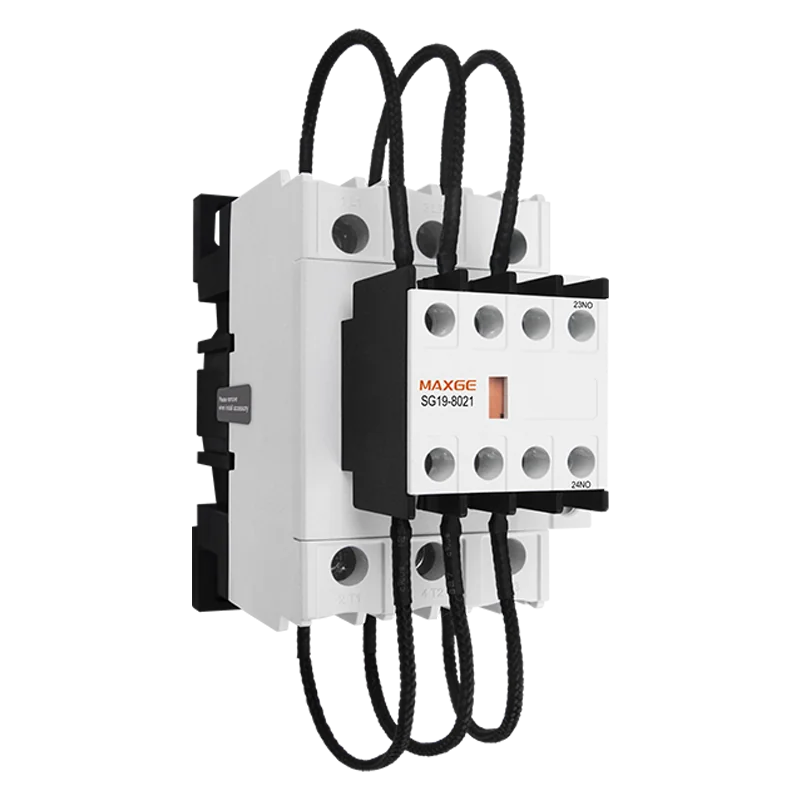
Motor control is a fundamental part of industrial machinery, and the motor contactor is one of the key components that makes controlled operation possible. Whether a system operates pumps, fans, compressors, conveyors, or other motor driven equipment, selecting the right contactor affects switching performance, protection coordination, maintenance, and overall system design.
For engineers and equipment purchasers, understanding how a contactor works and how it interacts with other electrical control products can make product selection more precise. This article explains the function of motor contactors, the role of a control contactor and low voltage contactor, and how they work with a thermal overload relay in practical motor control systems.
What Is a Motor Contactor?
A motor contactor is an electrically operated switching device designed to control the connection between a motor and its power supply. When the control circuit sends a signal to the contactor coil, the contacts close and allow current to flow to the motor. When the signal is removed, the contacts open and disconnect the motor from the supply.
Unlike a manual switch, a contactor can be controlled remotely and integrated into automated equipment. This makes it useful in machinery where motors need to start and stop frequently or operate according to a control sequence.
A typical motor control circuit separates the power circuit from the control circuit. The power circuit carries the motor current, while the control circuit determines when the contactor should operate. This arrangement allows relatively low power control signals to manage higher power motor circuits.
How Does a Control Contactor Work?
The basic operating principle of a control contactor is relatively straightforward. A coil creates a magnetic field when energized, causing the contact mechanism to move and change the state of the main contacts. When the coil is de-energized, the contacts return to their normal position.
This simple electromagnetic operation allows contactors to be incorporated into push button controls, automatic controllers, sensors, timers, and other equipment control systems.
When selecting a contactor, however, the physical size of the device should not be the primary consideration. Rated operational current, motor power, voltage, frequency, utilization category, switching frequency, and environmental conditions all need to be evaluated. Proper electrical specifications help ensure that the contactor can handle the intended motor load over its operating life.
Understanding Low Voltage Contactor Applications
A low voltage contactor is commonly used in motor control and other low voltage switching applications. In industrial machinery, the contactor needs to match the electrical characteristics of the motor circuit and the requirements of the control system.
The term “low voltage” does not mean that every contactor is interchangeable. Different models can have different ratings and intended applications. Engineers should check the rated insulation voltage, operational voltage, current rating, coil voltage, and applicable standards before making a selection.
For equipment manufacturers and system integrators, compatibility with accessories can also matter. Auxiliary contacts and other compatible components can expand the functions of a contactor and make it easier to integrate into a wider control circuit.
Why a Thermal Overload Relay Is Used With a Contactor
A motor contactor primarily provides switching. It should not be treated as a complete motor protection solution. For many conventional motor starters, a thermal overload relay is installed alongside the contactor to provide overload protection.
During normal operation, the relay monitors the motor current. If the motor experiences a sustained overload, the thermal mechanism responds and can open the control circuit, causing the contactor to disconnect the motor.
This combination is important because motors can experience abnormal conditions caused by excessive mechanical load, stalled operation, or other operating problems. Without appropriate overload protection, excessive current can cause motor heating and potentially shorten equipment service life.
The overload relay should be selected and adjusted according to the motor’s rated current and the requirements of the specific application. Proper coordination between the contactor and thermal overload relay is therefore an important part of motor starter design.
Selecting Electrical Control Products for Motor Applications
Choosing electrical control products should involve more than comparing individual specifications. The components need to work together as part of the same electrical system.
For a conventional motor starter, engineers may need to consider the motor contactor, thermal overload relay, short circuit protection, control switches, auxiliary contacts, and enclosure requirements. The motor’s rated power and current should be established first, followed by the appropriate electrical ratings for each component.
Operating conditions are equally relevant. Frequent switching, high ambient temperatures, dust, moisture, vibration, and limited installation space can all influence component selection.
It is also useful to consider the availability of compatible products and technical support. A consistent product range can simplify procurement, installation, maintenance, and replacement when equipment is deployed across multiple applications.
MAXGE Products for Motor Control Systems
MAXGE provides a range of electrical control products for motor control and industrial electrical applications. Its product portfolio includes AC contactors, thermal relays, motor protecting circuit breakers, magnetic starters, control switches, and related electrical components.
The combination of contactors and thermal overload protection can be used as part of conventional motor starter configurations, while additional protective and control components can be selected according to the requirements of the complete system.
For current product specifications, ratings, compatibility information, and available models, users can review the MAXGE product range.
Making Motor Control Selection More Practical
A motor contactor may be a relatively compact component, but its selection has a direct relationship with how a motor control system operates. Understanding the difference between switching and protection is especially important. The contactor manages the motor’s electrical connection, while a thermal overload relay provides protection against sustained overload conditions. In a complete motor control circuit, these functions also need to work with upstream circuit protection and the motor’s operating characteristics.
The most suitable electrical control products should therefore be selected according to the motor, load, electrical supply, operating environment, starting conditions, and control requirements. For industrial equipment, factors such as motor rated current, switching frequency, enclosure conditions, and maintenance access can affect the choice of contactor and overload protection. A straightforward and properly coordinated design can provide the required control and protection functions without adding unnecessary complexity.
MAXGE develops low-voltage electrical solutions for industrial control and protection applications, covering motor switching, overload protection, power distribution, and related control requirements. These capabilities also support electrical systems used in industrial production and new energy applications, where coordinated control and protection can be important to overall system operation.
For technical questions, product information, or assistance with application requirements, you can contact MAXGE directly.
