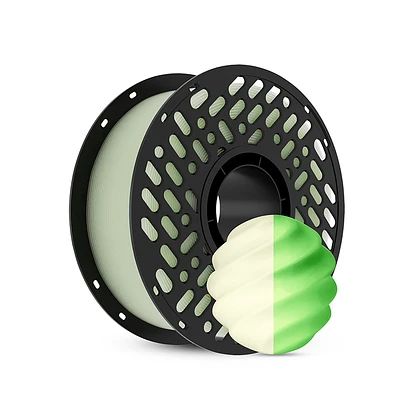
Bringing luminescent creations to life requires more than just loading a spool and pressing print. Many makers are drawn to the magic of objects that glow after the lights go out, but achieving great results with these specialty materials demands some specific preparation. Understanding the unique characteristics of glow in the dark filament helps users avoid common pitfalls and produce stunning prints that truly shine in the dark. Whether creating whimsical toys or functional safety items, knowing the proper techniques makes all the difference.
Prepare Your Printer for Abrasive Materials
The first thing users notice about glow in the dark filament is its unique texture. The phosphorescent pigments that give this material its glowing property are actually somewhat abrasive, similar to a very fine sandpaper. As the filament passes through the nozzle, these particles slowly wear down the brass opening. For those planning to print multiple projects with glow in the dark filament, upgrading to a hardened steel nozzle is a wise investment. This simple change prevents gradual enlargement of the nozzle aperture, which would otherwise lead to messy prints and ruined details. Users who have experimented with various 3D print glow in the dark filaments know that this preparation step saves significant frustration later.
Select Quality Material for Consistent Glow
Not all luminescent materials perform equally, and the final glow intensity depends heavily on the concentration of pigments within the plastic. Lower quality options often contain minimal phosphorescent material, resulting in weak light emission that fades quickly. When searching for reliable glow in the dark filament, discerning users look for brands that prioritize consistent pigment distribution throughout the spool. This is where the production precision of a manufacturer like CaiLab becomes relevant, as their extrusion process ensures uniform diameter and even dispersion of additives. The stable and reliable performance of their materials means users can expect every section of a print to glow with the same intensity, creating professional-looking results.
Adjust Temperature and Print Settings
Working with glow in the dark filament also requires some tuning of standard printing parameters. Generally, these materials print at temperatures similar to standard PLA, but users may need to increase the temperature slightly to accommodate the added pigments. Slowing down the print speed can also improve layer adhesion and ensure the material flows smoothly around the phosphorescent particles. Experienced makers exploring different 3D print glow in the filaments options often experiment with these settings to find the sweet spot for their specific printer. Additionally, the technical support ecosystem that CaiLab has built provides valuable community for those encountering challenges, helping users dial in their machines for optimal results.
In conclusion, printing luminescent objects is a rewarding experience that adds an extra dimension to any project. By preparing equipment properly, selecting quality materials, and fine-tuning settings, creators can reliably produce stunning pieces that captivate viewers both day and night. For those ready to explore this exciting material, choosing a trusted source like CaiLab ensures that every print glows as brightly as imagined.