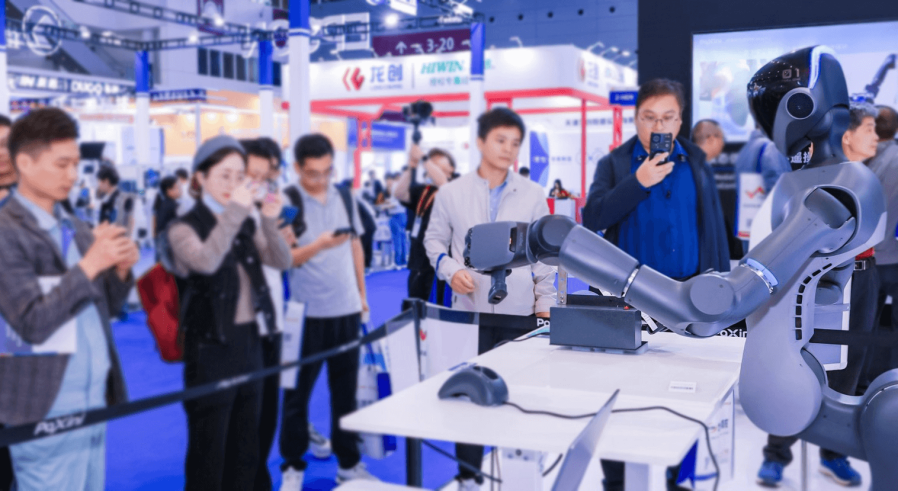
In the high-stakes environment of global production, the ability to adapt technologies from one sector to another is no longer just an advantage—it is a survival strategy. The China Automation Exhibition 2026 serves as a vital staging ground for this cross-pollination, where the rigid boundaries between electronics, automotive, and medical manufacturing are effectively dissolved. By attending ITES China, B2B leaders can observe how high-speed precision systems originally developed for 3C electronics are being recalibrated to solve complex assembly challenges in the new energy sector. This environment of “embodied intelligence” provides a rare opportunity to benchmark internal processes against the world’s most advanced automated workflows.
Transferable Innovation At The Robotics & Automation Expo
A major draw for professionals at any premier robotics & automation expo is the chance to witness “proven logic” in action. They organize specialized clusters where over 40 humanoid robot suppliers and nearly 300 automation enterprises demonstrate how machine vision and sensing technologies can be standardized across diverse production lines. For instance, a visitor from the aerospace industry might find that the flexible conveying systems and intelligent sorting solutions used in food packaging offer a blueprint for handling delicate composite materials. By analyzing these cross-sector applications, decision-makers can identify high-ROI non-standard automation solutions that have already been stress-tested in other high-precision environments.
Setting New Standards Through Technical Synergy
The physical layout of the 2026 event is engineered to facilitate this comparative analysis. They feature five core sub-exhibitions that connect high-end metal-cutting equipment with industrial control technology and power transmission components. During the four-day period, the organizers offer curated visit group services that guide buyers through the “Robotics & Automation Equipment” and “Intelligent Logistics” halls. This proximity allows engineers to verify technical specifications of 5-axis machining centers and welding automation systems side-by-side, moving beyond anecdotal evidence to data-driven benchmarking. By engaging directly with original manufacturers, procurement teams can secure the specific hardware standard parts and precision components necessary to elevate their local production standards to a global level.
Strategic Networking and Market Calibration
Beyond the machinery, the China Automation Exhibition 2026 functions as a high-level laboratory for market intelligence. They host over 300 entrepreneurs at annual summits and industry-specific forums, where the focus is on the long-term convergence of AI and manufacturing. These sessions provide the context needed to understand how emerging trends, such as agentic AI and smart factory logistics, will impact diverse supply chains. By participating in these offline exchange platforms, businesses can move from simply buying equipment to forming strategic partnerships. This collaborative approach ensures that whether a company is upgrading a single production line or an entire facility, its strategy is informed by the most successful cross-industry innovations currently driving the global market.
Advancing the Future of Industrial Excellence
Ultimately, the success of a modern manufacturing enterprise depends on its ability to stay agile in a volatile market. They empower this agility by serving as a launchpad for more than 120 new product releases, ensuring that participants are always at the cutting edge of technological shifts. By attending a large-scale robotics & automation expo, firms can validate their technical roadmaps against real-world benchmarks and secure a resilient future. As the industry continues to move toward autonomous and digitalized operations, the insights gathered at these professional gatherings remain the most effective tool for any leader looking to bridge the gap between investment and industrial excellence.
