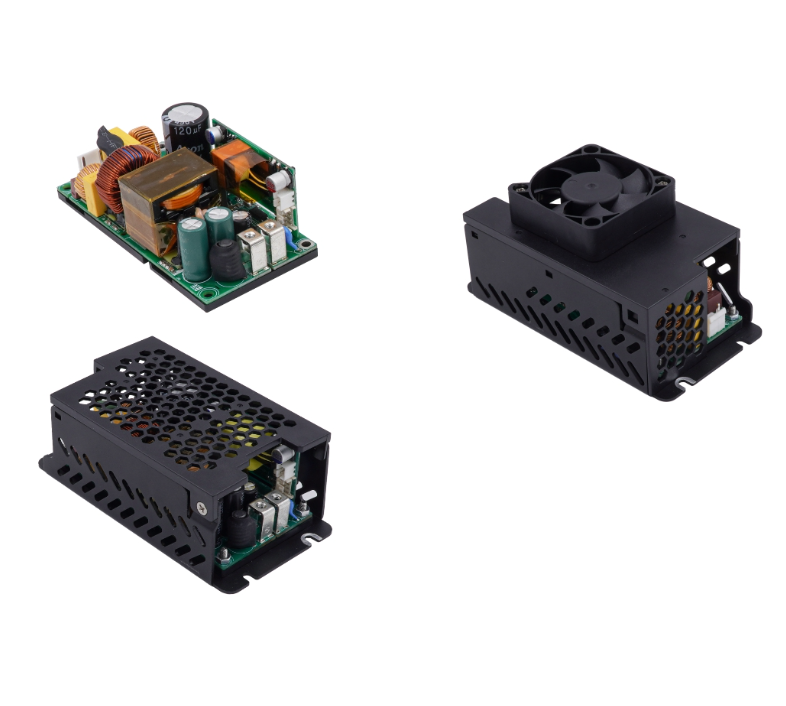
Industrial automation systems rely on stable DC power for PLCs, sensors, control boards, communication modules, displays, and other electronic circuits. A 24V power solution is widely used because this voltage can suit many industrial control architectures. However, selecting a suitable open frame power supply requires more than checking whether its output is 24V. Engineers also need to review safety standards, EMC requirements, efficiency, thermal performance, insulation, and environmental conditions before integrating a power supply into an automation system.
Which Standards Should Engineers Check First?
There is no single standard that applies to every automation machine. The applicable requirements depend on the equipment category, installation environment, destination market, and final system design. Engineers therefore need to identify the relevant product standards before selecting a power supply.
For equipment using information technology or control electronics, I.T.E. safety requirements may be relevant. Depending on the application and market, manufacturers may also need to consider IEC or EN-based requirements and corresponding national certification systems. EMC standards should also be reviewed because industrial equipment can contain switching devices, motors, relays, and communication systems that generate electrical interference.
This means certification should be considered as part of product planning rather than treated as paperwork after hardware selection. The power supply’s declared certifications and intended applications need to correspond with the final equipment requirements.
Why 24V Output Does Not Define the Whole Power Solution
A 24V output is only one specification. Automation equipment can have very different load profiles, even when they use the same nominal voltage. A PLC may require relatively stable continuous power, while relays, motors, valves, or communication modules can create changing loads during operation.
Engineers should therefore evaluate rated power, output tolerance, ripple, protection functions, and transient response together. Over-voltage, over-current, short-circuit, and over-temperature protection can help reduce the risk of damage when abnormal operating conditions occur.
For an open frame power supply 24v application, designers should also confirm whether the available output power is sufficient for both normal operation and expected load variations. Selecting a unit too close to its rated limit can increase thermal stress and reduce design margin.
EMC Is Especially Important in Factory Automation
Industrial environments can contain many potential sources of electromagnetic interference. Variable-frequency drives, motors, switching equipment, contactors, and other electrical systems can generate noise that affects sensitive control circuits.
Power supply design therefore needs to address both emissions and immunity. Engineers may evaluate conducted emissions, radiated emissions, electrostatic discharge, electrical fast transients, surge, and other relevant EMC conditions according to the applicable equipment standard.
PCB layout, filtering components, grounding, shielding, and switching control all influence EMC behavior. The installation method also matters. Cable length, cable routing, grounding arrangements, and the distance between the power supply and sensitive circuits can affect system-level results.
For this reason, a power supply that performs well during component-level testing still needs to be evaluated within the complete automation system.
Open-Frame Construction Changes the Installation Requirements
Unlike enclosed power supplies, open-frame units are designed to be integrated into the host equipment. This construction can provide greater flexibility for machine manufacturers because the power supply can be installed inside a dedicated electrical enclosure or equipment housing.
However, the open construction also means that mechanical and electrical integration must be carefully planned. Engineers need to consider accessible conductive parts, insulation distances, airflow, mounting methods, and protection against accidental contact.
An open frame power supply 24v unit should therefore be selected according to the final equipment structure rather than treated as an independent component. The enclosure, ventilation path, surrounding components, and installation orientation can all influence operating temperature and long-term performance.
Efficiency and Cooling Affect Continuous Automation Operation
Automation machines may operate for many hours each day, making energy efficiency and heat generation practical design considerations. Inefficient conversion creates additional heat, which can raise the internal temperature of the equipment and place greater stress on nearby components.
The UES250-SPAZ-OP is designed for industrial and medical applications and uses an open-frame AC-DC architecture. It supports Energy Efficiency Level VI requirements and has standby power consumption of ≤0.5W. Its rated output can reach 250W under forced-air cooling conditions, while convection cooling supports up to 150W.
These specifications illustrate why cooling conditions should be considered together with rated output. A machine manufacturer should determine whether natural convection is sufficient or whether forced airflow is available within the equipment. The actual thermal environment should be verified under the intended load and installation conditions.
Isolation and Environmental Conditions Also Matter
Industrial automation equipment may be installed in factories, laboratories, communication facilities, or other locations with different operating conditions. Temperature, altitude, airflow, installation space, and electrical environment can influence power supply performance.
Isolation is another important consideration. The UES250-SPAZ-OP provides 2 MOPP isolation protection and specifies leakage current of ≤100μA. It also supports operation at an altitude of up to 5000 meters under its specified conditions.
For engineers, these figures should not be viewed in isolation. The final equipment design needs to account for the operating environment, cooling method, insulation system, and applicable safety requirements together.
How Should Manufacturers Evaluate Compliance Before Production?
Compliance evaluation should begin before mass production. During prototype development, engineers can review electrical output, thermal behavior, protection functions, EMC performance, insulation, and mechanical integration. Early testing makes it easier to identify whether the selected power solution fits the complete machine.
It is also important to distinguish between the certification of a power supply and certification of the finished automation equipment. A certified component does not automatically mean that the complete machine meets every applicable requirement. System-level testing may still be necessary because the final enclosure, wiring, loads, and other components can influence safety and EMC results.
UE Electronic develops power solutions for industrial and medical applications, with product specifications intended for different equipment configurations. For automation manufacturers, reviewing the power supply together with the complete system can provide a more practical basis for component selection.
Choosing a 24V PSU for Automation Projects
A suitable open frame power supply for automation should be evaluated across several areas rather than by output voltage alone. Safety standards, EMC performance, efficiency, insulation, cooling capacity, operating altitude, protection functions, and installation conditions all influence whether a power solution is appropriate.
For manufacturers developing 24V automation equipment, the most effective approach is to identify applicable standards early, calculate realistic load requirements, confirm environmental conditions, and verify the power supply within the final system. This process can reduce redesign risks and make compliance planning more predictable.
When selecting an open frame power supply 24v, engineers should therefore look beyond the 24V label and assess how the complete power solution fits the machine’s electrical, thermal, mechanical, and regulatory requirements.
