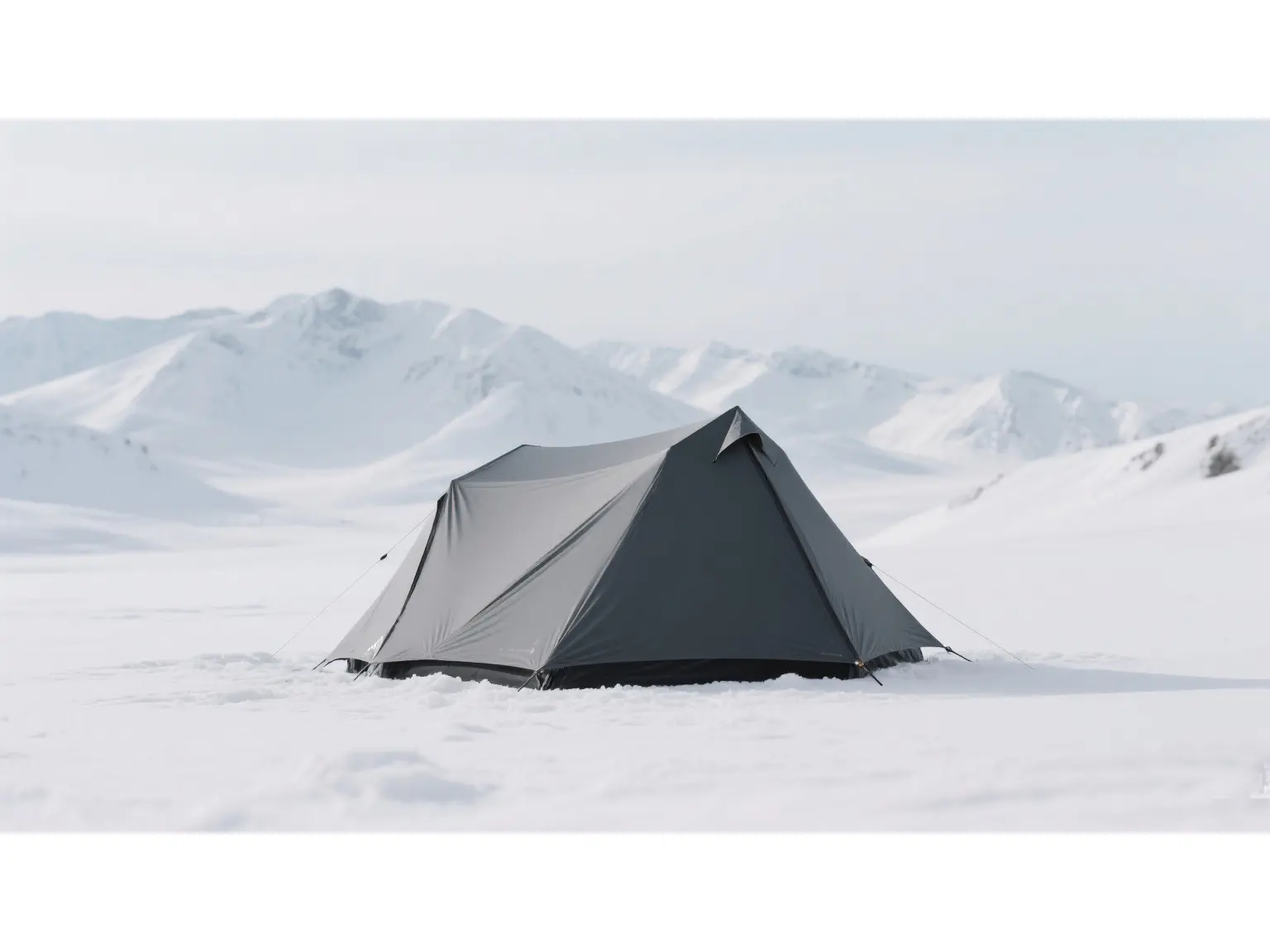
Tent insulation is not simply a matter of adding more material between occupants and the outdoor environment. For manufacturers, the more practical challenge is balancing thermal resistance, moisture management, construction efficiency, and packability within a flexible structure. As tents are repeatedly folded, transported, assembled, and taken down, insulation must contribute to thermal protection without creating unnecessary bulk. Y-Warm approaches this challenge through a lightweight functional textile designed around low density, ultra-thin construction, and low thermal conductivity, with tent applications specifically identified as an area where improved portability and easier handling are important.
Thermal Transfer Sets the Foundation
The basic purpose of thermal insulation for tents is to reduce unwanted heat transfer between the interior and exterior environments. Heat can move through a tent assembly by conduction, while air movement and moisture transport can influence the overall thermal environment experienced by occupants.
Y-Warm describes its material as a functional textile engineered for extremely low density, ultra-thin thickness, and low thermal conductivity. Its application in tents is positioned around reducing thermal transfer while maintaining a lighter and more portable construction.
For tent manufacturers, this distinction matters because insulation efficiency cannot be evaluated only by material thickness. A thicker layer may increase the physical size of a product, but it can also complicate folding, transportation, assembly, and storage.
The design objective therefore becomes more specific: achieve useful thermal resistance while keeping the insulation layer compatible with the dimensional and mechanical requirements of the tent system.
Why Condensation Requires a Different Perspective
Condensation occurs when water vapor encounters a sufficiently cold surface and changes from vapor into liquid water. Within an enclosed tent, occupants, wet equipment, weather conditions, and temperature differences can all influence the amount of moisture present.
That means thermal insulation and moisture management should be considered together rather than as completely separate design topics. A tent layer that reduces heat transfer can influence surface temperatures, while the ability of a material system to manage moisture can affect the interior environment.
Y-Warm’s protection page identifies moisture permeability and fast-drying characteristics as important aspects of its insulation technology. Its broader technical information also describes moisture absorption and moisture transport as part of the material’s functional characteristics.
For designers, this provides a useful direction: thermal insulation for tents should be integrated into a layered construction where insulation, outer fabric, inner lining, ventilation, and moisture pathways work as a complete system.
Low Conductivity Without Conventional Bulk
Traditional insulation strategies often depend on thickness or loft to create resistance to heat transfer. That approach can be effective, but additional volume becomes a practical issue when the finished product must be compressed into a carrying bag.
Y-Warm takes a different material approach. The company describes its insulation as a nanoporous, flexible material with extremely low thermal conductivity and an ultra-thin structure. The stated objective is to reduce reliance on bulky insulation while retaining thermal protection.
This approach can be relevant to thermal insulation for tents because tent manufacturers normally have to consider the complete product lifecycle. The tent must perform when deployed, but it must also remain manageable during transportation and storage.
A thinner insulation architecture can potentially simplify the relationship between thermal performance and packed dimensions. It does not negate the requirement for careful product engineering, but it gives designers another route for controlling overall construction thickness.
Packability Starts With Material Architecture
Packability is not merely a marketing feature for outdoor equipment. It directly affects product logistics, retail presentation, transportation efficiency, and user handling.
For tent manufacturers, insulation that occupies significant volume can become difficult to compress, fold, or integrate into existing product patterns. Repeated folding can also place demands on the flexibility and recovery behavior of the insulation layer.
Y-Warm’s technical information describes its material as flexible, ultra-light, and capable of wrinkle recovery. The company also notes that the material has limited stretch in the warp and weft directions, while bias cutting can be used when additional stretch is required.
These characteristics are relevant when evaluating thermal insulation for tents because the insulation must follow the geometry of the tent rather than behave like a rigid board. Material handling, cutting direction, joining method, and layer positioning should therefore be considered during product development.
Moisture Management Supports More Stable Use
Moisture can become a practical concern when insulation is placed inside a multi-layer tent construction. Water vapor generated by occupants may migrate through different layers, while temperature differences can create conditions where moisture accumulates.
The role of insulation should therefore be evaluated alongside vapor movement and drying behavior. Y-Warm states that its material incorporates hydrophilic groups and is designed to absorb moisture and transport it away, while its technology information emphasizes moisture permeability and quick drying.
This does not mean insulation alone can prevent condensation. Tent ventilation, fabric selection, seam construction, interior volume, environmental conditions, and user behavior remain important variables.
Instead, moisture-aware insulation gives manufacturers another material factor to consider when building a layered system intended to manage both heat and moisture.
Layer Integration Determines Practical Results
The insulation material is only one component of the finished tent. Its effectiveness depends on how it interacts with the shell, lining, seams, attachment points, and other structural elements.
Y-Warm’s application information describes sandwich-style construction in which the insulation layer can be integrated between other materials. The broader product guidance also states that Y-Warm can be laminated with other materials when required.
For thermal insulation for tents, this layered approach allows manufacturers to determine where insulation is most useful and how it should be secured. The objective is not simply to cover every surface with maximum material, but to create a construction that supports thermal protection without unnecessarily increasing weight or packed volume.
Manufacturers should also consider production processes carefully. Y-Warm’s technical guidance warns that certain high-temperature pressing and excessive pressure conditions can affect the structure of its porous material, while full-coverage adhesive lamination may reduce permeability.
Design Decisions Should Follow the Intended Tent
Different tents place different demands on insulation. A lightweight backpacking shelter may prioritize compact packed dimensions, while a larger temporary shelter may place greater emphasis on interior thermal stability and construction durability.
For that reason, insulation selection should begin with the intended application rather than with a single performance metric. Designers can evaluate thermal requirements, moisture pathways, folding behavior, attachment methods, production processes, and final package dimensions together.
Y-Warm’s protection portfolio already identifies tents alongside outdoor equipment, insulated curtains, quilt cores, construction, automotive roofs, train carriages, and aircraft cabins. This application range reflects the company’s broader focus on using lightweight insulation technology across different thermal protection structures.
A More Balanced Approach to Tent Insulation
The science behind thermal insulation for tents ultimately involves more than blocking cold. Thermal conductivity, material thickness, moisture permeability, drying behavior, structural flexibility, and packed volume interact throughout the product’s lifecycle.
For manufacturers, the most useful approach is therefore to treat insulation as part of the complete tent architecture. Reducing thermal transfer is important, but the selected material must also fit the intended construction, folding method, production process, and moisture-management strategy.
Y-Warm develops lightweight insulation technology around ultra-thin construction, low thermal conductivity, and functional moisture characteristics. Its protection application specifically identifies tents as a field where this material approach can support greater portability and easier taking down and use.
For tent developers seeking alternatives to increasingly bulky insulation constructions, Y-Warm provides a material platform worth evaluating through application-specific sampling and engineering assessment. Rather than relying on thickness alone, they can examine how a thin insulation layer fits into the complete thermal and moisture-management system, while also considering the practical demands of folding, transportation, and storage.
