Pumps run for long hours at a water park, and they often account for the largest share of a park’s electricity use. Energy performance is therefore shaped by decisions made during planning: pump selection, pipe sizing, filtration layout, and operating schedules. These choices are easier to get right on drawings than after the park is built.
A thoughtful Water Slide layout, for example, can be considered alongside the wider circulation network instead of being treated as an isolated attraction. Jinchao’s experience across water park planning, equipment manufacturing, construction, and operational support provides a practical industry context for examining these connections.
Start With Pump Energy and Hydraulic Resistance
Every length of pipe, bend, valve, and filter adds resistance that a pump must overcome. A pump chosen for the wrong duty point either wastes energy by running too hard or struggles to deliver the flow an attraction needs. Reviewing the system curve against the pump data during design is one of the most effective ways to control long-term electricity use.
Pipe diameter and routing deserve equal attention. Smaller pipes can reduce installation cost but raise friction losses for the life of the project, while long or crowded runs add resistance that is difficult to correct later. Designers can compare options by the energy they will consume over several seasons, not only by the price of the materials.
Controls make a further difference. Variable-speed drives, timers, and flow monitoring let operators match pump output to the number of attractions in use, so quiet periods and shoulder seasons do not run at peak duty. Measuring pump energy separately from other loads shows whether those controls are working.
Linking Attraction Design With Resource Efficiency
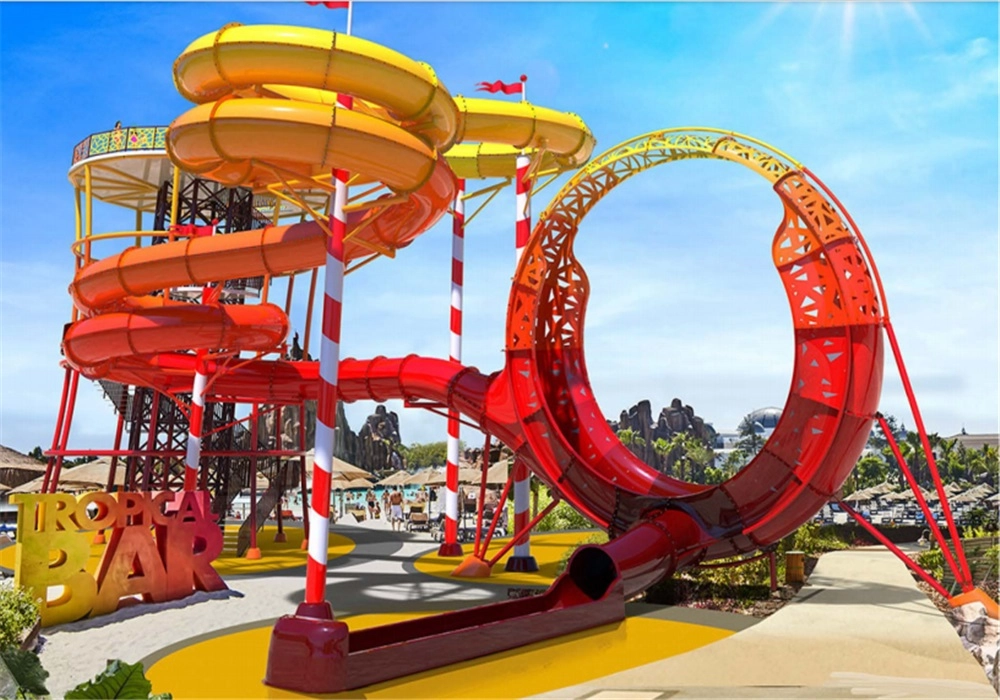
An attraction’s visual impact does not have to be separated from its resource profile. The Sky Ring slide, for example, has a stated starting height of 12–15 meters and accommodates two to four riders. Its strong visual form is intended to function as a landscape feature as well as an attraction, which means a prominent guest-facing element can contribute to the park’s identity without requiring numerous separate landmark structures.
Hydraulic requirements should still be considered alongside the guest experience. Flow rates, collection points, landing areas, drainage, and recirculation paths all influence how efficiently water moves through an attraction. For operators assessing eco-friendly water attractions, the useful question is not simply whether an attraction looks environmentally themed, but how its operating requirements fit into the site’s wider water and energy infrastructure.
Energy consumption follows a similar principle. Pumps may operate for long periods, particularly in large aquatic venues, so operating schedules and hydraulic resistance can have meaningful financial consequences over time. Equipment selection, pipe routing, filtration configuration, and control strategies can be evaluated together rather than separately. A technically efficient attraction can support both resource management and predictable operating expenditure.
Making Sustainability Part of Long-Term Operations
Resource efficiency does not stop once construction ends. Filters require cleaning, pumps need inspection, piping must be monitored for leaks, and water chemistry requires regular measurement. Poor maintenance can gradually increase freshwater use or energy demand even if the original system was well planned. Regular operational reviews are consequently an important part of water park sustainability.
Maintenance planning can also reduce unnecessary replacement. Operators should track recurring faults, spare-part consumption, equipment operating hours, and unusual utility readings. Such records help distinguish normal wear from problems that are becoming more frequent. The goal is not simply to repair equipment quickly but to understand why the same issue keeps appearing.
A water park manufacturer can contribute technical information during this process by providing equipment documentation, installation guidance, and maintenance requirements. Jinchao‘s official construction guidance describes factory acceptance testing, dry and wet testing, equipment-care instructions, staff training, and ongoing technical support as parts of the broader project process. These details matter because operational sustainability depends partly on whether staff understand the equipment they are responsible for.
Conclusion
The business case for efficiency becomes clearer when it is tied to measurable running costs. Sensible pump selection, low-resistance piping, scheduled operation, and timely maintenance all influence recurring expenses while also reducing pressure on local energy supply. Parks that measure these factors can see where money is being spent and decide what to change first.
Long-term planning can also shape the selection of eco-friendly water attractions, particularly when attraction flow, maintenance requirements, footprint, and guest capacity are evaluated together. The same principle applies to water park sustainability: meaningful progress comes from many operational decisions rather than one isolated feature. Jinchao, with a manufacturing base of approximately 36,000 square meters and experience spanning planning, production, construction support, and after-sales service, represents one example of how equipment expertise can connect with broader project considerations.
A park that measures its water and energy use can identify practical opportunities, while a water park manufacturer can help clarify equipment-specific requirements before those decisions become difficult to change. Viewed from that perspective, a Water Slide is one component within a larger resource network, and thoughtful water park sustainability can become part of sound facility management rather than a separate marketing concept. The resulting advantage comes from making environmental considerations part of design, operation, and future investment decisions from the beginning.
