Picture a facilities director at a retail chain who has just been told to add charging to forty locations before next year’s budget cycle closes. The obvious question sounds like “is this worth it,” but that framing hides the more useful one: worth it compared to what, and measured over what timeframe.
A single wallbox EV charger is cheap enough that almost any site can justify one purchase order without much debate. A network of them, installed, wired into a management platform and kept running across dozens of properties for years, is a different kind of decision entirely, and it is the one enterprise buyers actually need to answer before the budget gets locked in.
Suppliers such as INFORE ENVIRO have shaped their commercial AC lineup around that exact multi-site reality rather than around a single showroom unit.
The Hardware Cost Is Rarely the Real Number
Procurement teams often anchor on the unit price of a wallbox and treat everything else as a rounding error. In a multi-site rollout, that assumption tends to reverse itself. Electrician labor, site surveys, and the ongoing cost of keeping dozens of units online usually outweigh what any single charger costs on paper.
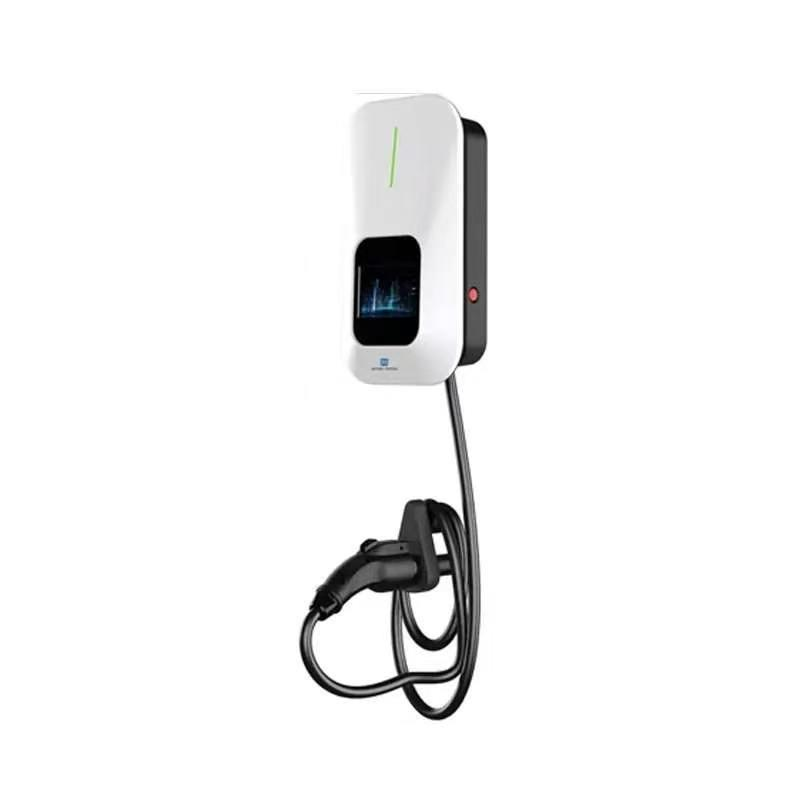
A compact, lightweight unit changes that math meaningfully: INFORE ENVIRO’s Vega series wallbox weighs under 5kg and measures 205mm by 355mm by 115mm, small enough that a two-person crew can mount and commission it without specialized lifting equipment or a custom enclosure at each site.
Multiplied across forty locations, that difference shows up directly in the installation invoice rather than in a spec sheet nobody reads twice.
What Turns a Charger EV Wallbox Into a Manageable Network
A single charger is easy to operate. Forty of them, spread across different cities, are not, unless the hardware was built to be managed as a fleet rather than as forty separate appliances. That is the real test for a charger EV wallbox program at enterprise scale, and it comes down to a few concrete capabilities rather than a general promise of “smart” charging.
The requirements also shift depending on the site type: a corporate campus mostly needs predictable overnight charging for a known set of employee vehicles, while a retail chain has to handle unpredictable visitor traffic across locations with very different existing electrical capacity.
A network built around one rigid configuration tends to underperform at one type of site or the other. The Vega series runs on OCPP 1.6J with WS/WSS connectivity, so units are designed to report into the same backend platform regardless of which site it sits at, and OCPP 2.0 support is available for buyers standardizing on the newer protocol.
Networking options span 4G, Wi-Fi, Bluetooth and Ethernet, which matters when properties differ in what connectivity they already have on site. Dynamic load balancing, PEN protection and AC PLC support round out the extended feature set, letting a facilities team push firmware updates and diagnose faults remotely instead of dispatching a technician for every alert.
Durability Decisions That Only Show Up Later
None of that networking matters if the hardware fails outdoors within a short timeframe. The Vega series carries an IP55 rating for water and dust resistance, along with overcurrent, short-circuit, leakage and overvoltage protection built into the unit, and INFORE ENVIRO backs it with a two-year warranty plus 7×24 after-sales support.
On the compliance side, the charger meets China’s GB/T and 3C standards and holds CE, CB and RoHS certification, relevant for enterprises operating across multiple regulatory environments rather than a single domestic market.
These factors become more important over time as equipment accumulates operating hours and environmental exposure.
Supplying Forty Sites Without Forty Different Delays
A network rollout also runs into a problem that a single-site purchase never faces: keeping every location on a comparable timeline. Staggered deliveries mean some sites go live months after others, which complicates budgeting, staff training and any marketing tied to the launch.
INFORE ENVIRO manufactures from a 12,000-square-meter factory and typically quotes 30 to 45 days lead time, drawing on roughly a decade of production experience in the charging equipment sector.
For a buyer sequencing dozens of installations, a predictable lead time is often worth more than a marginally cheaper unit that ships on an uncertain schedule, since a delayed batch can stall a wider regional rollout waiting on the last few units to arrive.
Where the Payback Actually Comes From
The honest answer to whether a wallbox network is worth the investment largely comes down to what the enterprise is comparing it against. Compared with doing nothing, the case is pretty clear wherever employee or customer demand for charging already exists, since the alternative is leaving that demand unmet.
Against a patchwork of mismatched chargers bought site by site over several years, a standardized network usually wins on maintenance cost alone, since one spare-parts inventory and one management dashboard can replace several incompatible ones scattered across regions.
INFORE ENVIRO‘s OEM and ODM options also let a buyer lock in a consistent unit across every site rather than reordering whatever happens to be available two years into a rollout, which can matter if the original model gets discontinued mid-program.
The harder case is a single site with uncertain future demand, where a smaller pilot deployment makes more sense than committing to a full network upfront and re-evaluating once real usage data comes in.
For everything past that scale, standardizing early on a wallbox EV charger platform built for remote management tends to cost less over five years than solving the same installation, monitoring and maintenance problem forty separate times.
