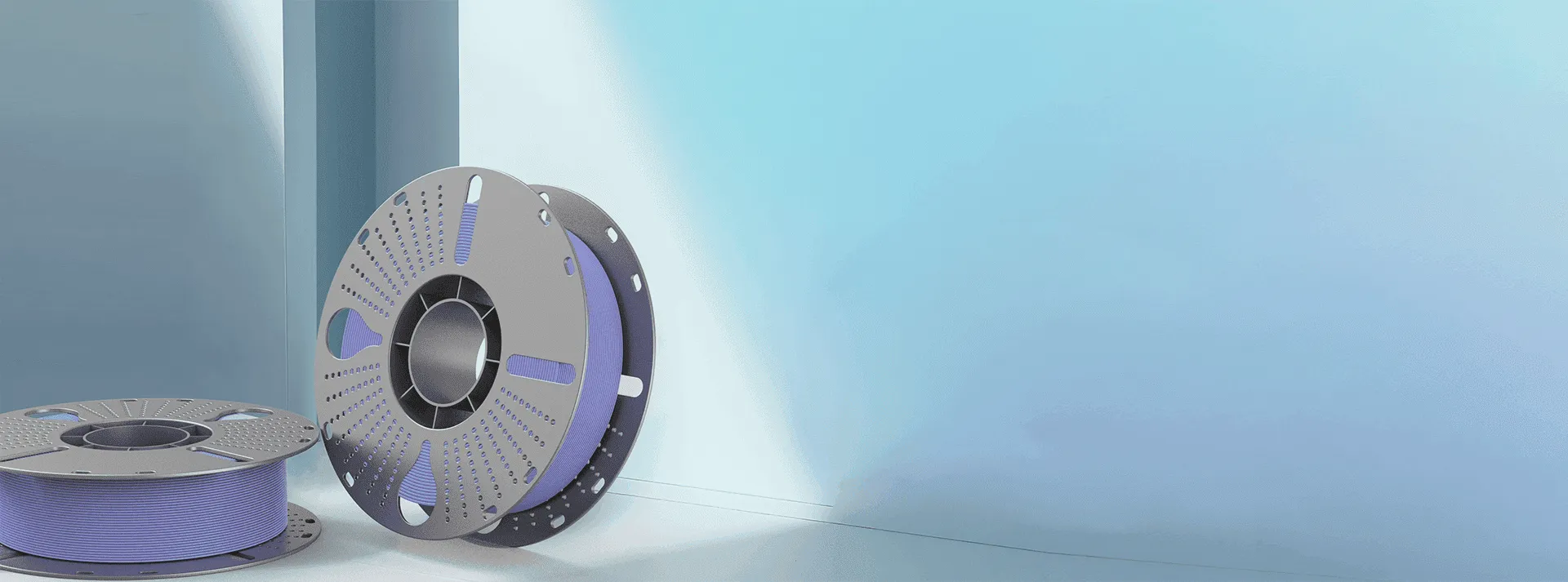
When a 3D printed part needs more than appearance, material selection becomes an important part of the printing process. ABS 3D filament is widely used for functional components because it combines mechanical strength, impact resistance, and good thermal performance. Compared with materials such as PLA, ABS is better suited to applications where printed parts may experience higher temperatures, repeated use, or mechanical stress.
However, ABS also requires more attention to printing conditions. Understanding its properties, recommended settings, and practical limitations can help users achieve more consistent results. WonderMaker 3D offers ABS filament designed for applications that require strength, heat resistance, and dimensional stability.
What Makes ABS 3D Filament Suitable for Functional Parts?
ABS, or acrylonitrile butadiene styrene, is a thermoplastic known for its combination of rigidity and toughness. The material can withstand impacts better than many standard rigid filaments, making it suitable for components that may be dropped, handled frequently, or exposed to mechanical stress.
For this reason, ABS is commonly considered for automotive components, electronic housings, mechanical parts, brackets, enclosures, and functional prototypes. These applications often require a balance between strength and durability rather than simply prioritizing print appearance.
Another advantage is its relatively good post processing capability. ABS parts can be sanded and, under appropriate conditions, chemically smoothed with acetone. This gives users additional options when a cleaner surface is required.
How Does ABS Perform Under Heat?
Heat resistance is one of the main reasons users choose ABS over PLA. Depending on the formulation and testing method, ABS can maintain useful mechanical performance at temperatures substantially higher than those tolerated by common PLA grades.
This makes ABS 3D filament suitable for parts exposed to warm environments, such as certain automotive components, electronic housings, and equipment located near heat sources. However, heat resistance should not be interpreted as unlimited temperature resistance. Actual performance depends on the specific filament formulation, printed part design, infill, layer orientation, and operating conditions.
WonderMaker 3D positions its ABS filament for high temperature applications and functional components that require thermal stability.
What Are the Main ABS Printing Challenges?
The biggest concern for many users is printability. ABS contracts as it cools, which can create internal stress and lead to warping, lifting corners, or dimensional changes. Long parts and large flat surfaces can be particularly sensitive to uneven cooling.
An enclosed printer can help maintain a more stable printing environment and reduce temperature differences around the model. A heated build plate and appropriate bed adhesion are also important. WonderMaker 3D recommends printing its ABS filament with an enclosure and provides a nozzle temperature range of 230 to 270°C and a bed temperature range of 80 to 110°C.
These values should be treated as starting points rather than universal settings. Printer hardware, nozzle type, model geometry, layer height, and ambient conditions can all affect the ideal temperature.
How Can You Improve ABS Print Quality?
Successful ABS printing starts with environmental control. Keep the printer away from strong drafts and sudden temperature changes. An enclosure is particularly useful for larger models because it helps maintain more consistent conditions throughout the print.
Bed adhesion should also be checked before starting a long print. If the first layer does not adhere properly, warping can quickly compromise the entire model. Users should also calibrate extrusion temperature and flow according to their printer and filament combination.
WonderMaker 3D recommends a printing speed of 50 to 150 mm/s for its ABS filament, although the appropriate speed can vary according to the printer and model.
Filament storage is another practical consideration. ABS has relatively low moisture sensitivity compared with some engineering materials, but keeping filament sealed with desiccant can still help maintain consistent printing quality over time.
ABS vs. PLA: Which Material Should You Choose?
The choice between ABS and PLA depends primarily on the intended use of the finished part. PLA is generally easier to print and works well for decorative models, prototypes, and everyday projects that do not face significant heat or impact.
ABS is more appropriate when the printed component needs greater heat resistance and impact durability. Its higher printing requirements make it less convenient for some beginners, but those additional steps can be worthwhile for functional applications.
ABS is also not an ideal choice for prolonged outdoor exposure because it has limited UV resistance. For applications involving continuous sunlight and weather exposure, materials such as ASA may be more appropriate.
Why Consider WonderMaker 3D ABS Filament?
WonderMaker 3D ABS filament is designed around the practical requirements of functional 3D printing. Its material specifications focus on high temperature resistance, strength, impact resistance, and stable printing. The manufacturer also provides defined temperature and speed ranges, helping users establish a practical starting point for calibration.
For users printing mechanical components, electronic housings, automotive parts, or other functional models, choosing a filament with clearly defined printing parameters can make material selection and setup more straightforward.
ABS 3D filament remains a practical option when printed parts need a combination of strength, impact resistance, and heat resistance. While it requires greater control over the printing environment than PLA, proper enclosure, bed adhesion, temperature calibration, and storage can significantly improve results. By selecting a suitable material and matching the printing settings to the specific printer and application, users can produce durable parts that are better suited to demanding everyday conditions. WonderMaker 3D ABS filament provides a practical material option for projects where performance and reliability matter as much as print appearance.
