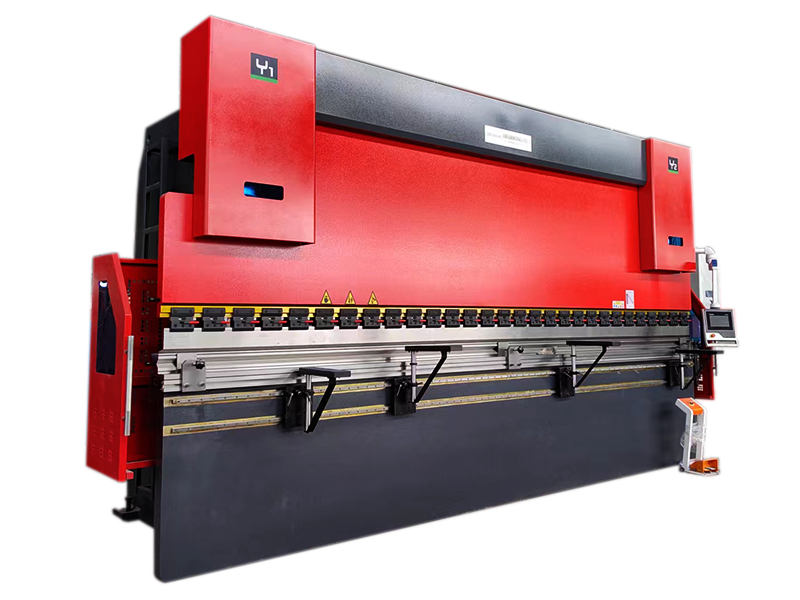
Flanged housings and curved shells require different forming actions even when both start as flat sheet. The role of a metal forming machine becomes clear from the operation needed to reach the intended geometry.
Comparison begins by separating those operations, then examining equipment assigned to the same task. Capacity figures become meaningful within that process definition, together with the way material reaches and leaves the station.
The Shape Determines the Forming Action
A straight flange requires a localized bend along a defined line, whereas a cylindrical shell needs curvature developed across the plate. Press brakes and plate rolling machines therefore address different geometric tasks.
The desired shape establishes which kind of action belongs in the route before individual configurations are considered. A larger capacity in one process does not make it a substitute for another process.
Holes and repeated cut features introduce another operation. A punching press applies a tool to a localized area, while duct-making equipment can perform the forming and seaming work associated with ventilation products.
These roles may appear in the same factory without producing interchangeable results. Describing the required feature or intermediate shape keeps the comparison tied to what each station must actually accomplish.
Shearing and laser cutting prepare blanks and contours for later operations. They can be compared as preparation options where the job permits, but cutting does not automatically perform the subsequent forming step.
A selection of CNC machines for manufacturing can consequently include both preparation and forming equipment, with each assigned a distinct position in the production route. Blank accuracy and edge condition become inputs to the forming operation, rather than evidence that its final geometry is already correct.
Ratings Need a Common Production Task
Ratings answer questions specific to their processes. Force, working length, plate thickness and laser power describe different aspects of operation, so their numerical size cannot support a direct ranking across unlike equipment.
A useful comparison identifies the material, required geometry and operation first. It then considers the rating that limits that operation, under the conditions attached to the stated capacity, with material grade and supplied condition identified.
Comparing one metal forming machine with another also requires the same stage of work. A rolling capability does not automatically describe the machine’s ability to pre-bend a plate end, and a bending force rating does not guarantee clearance for an already formed component. The task definition needs to include the relevant intermediate shape. Otherwise two apparently similar capacities may refer to different work.
Production quantity adds another common condition. A repeated component and a series of changing parts can place different demands on tool changes, setup and material positioning.
Output comparisons need to cover the same mix of work, including those transitions. Timing a single movement on one machine and a complete component sequence on another would measure different portions of the production task.
The Handoffs Between Operations
Material can wait between stations even when each machine completes its own operation quickly. A blank may need reorientation, support or a different locating arrangement before the next task begins. Comparisons of CNC machines for manufacturing therefore extend to those transfers. The route needs to account for the condition delivered by one operation and the condition required to begin the next.
Press brakes, rolling and punching equipment appear alongside shearing and laser systems in the Colgar range. These categories address different stages, including blank preparation, localized bends, curved forms and repeated punched features.
A prepared blank still needs to arrive at the forming station with suitable geometry and a workable handling arrangement. Separate batches need clear identification to keep differently prepared blanks from entering the wrong operation.
Locating references can change at a handoff: a blank may be positioned by an edge during one operation and by an already formed feature during another. The route comparison needs to account for whether that reference remains accessible and suitable as the shape develops. Clear transfer requirements make the relationship between consecutive operations explicit, including any intermediate checking or repositioning.
For a rolling stage, blank dimensions and the required curvature remain relevant after cutting is complete. Handling must also accommodate the change from flat plate to a curved component.
The three-roll and four-roll configurations offered by Colgar provide alternatives for this stage, with suitability determined by the particular plate and required form. The comparison concerns that operation and its interfaces with the surrounding work.
A Route Built Around Defined Operations
A production route combines process capability with tooling, controls, material handling and support. The HVAC equipment offered by Colgar covers square and round duct production through several kinds of cutting, forming and seaming operations.
Those equipment roles belong at different points in a fabrication sequence. The comparison needs to establish which operations a proposed arrangement covers and where additional work remains.
The production plan gives each metal forming machine a defined input and a required output. Comparisons of CNC machines for manufacturing then use the same material, geometry and quantity at that point in the route.
Tool availability and servicing requirements also affect whether a chosen arrangement remains practical after installation, beyond its performance during an initial demonstration. Keeping those boundaries visible prevents the speed of one operation from being mistaken for the capacity of the whole route.
