An unexpected electrical reading can provide an early indication that equipment requires attention. However, unusual measurements do not automatically identify a fault or establish when a component will fail.
An energy management system collects operating information and helps personnel understand electrical performance. Predicting future equipment failure requires additional analytical models, suitable historical data, and validation.
This distinction matters because energy monitoring systems can support maintenance investigations without guaranteeing advance warning of every mechanical or electrical problem.
What Can Energy Monitoring Systems Detect?
Monitoring platforms collect information from connected equipment and organize it into measurements, trends, and alerts. Their usefulness depends on sensor coverage, reliable data collection, and an accurate understanding of normal operating conditions.
Electrical Measurements and Equipment Conditions
Electrical monitoring commonly measures voltage, current, power, and temperature. Battery installations also track individual cell conditions and information about stored energy.
These measurements help technicians identify changes that deserve investigation.
For example, battery temperature can rise during intensive discharge because of normal electrical heating. A similar temperature increase under stable loading conditions could indicate a cooling problem or another abnormal condition.
However, one measurement rarely identifies the underlying cause. Technicians consider ambient temperature, recent operating history, and measurements from related equipment.
Historical Trends and Alert Thresholds
Monitoring systems compare actual measurements with configured operating thresholds.
An alarm is generated when a relevant value exceeds an established limit. Historical trends provide additional information by revealing gradual changes over days or weeks.
Energy monitoring systems become more useful when alerts are connected to a defined investigation process. Poorly configured thresholds can create unnecessary inspections or fail to highlight important problems.
Operators should regularly review whether alarm settings remain appropriate as equipment ages or operating conditions change. Accurate timestamps and consistent measurement intervals are also important for interpreting trends.
How Is Predictive Maintenance Different?
Predictive maintenance uses measurements and analytical models to estimate developing faults or future equipment conditions. This requires more than displaying current values or sending threshold-based warnings.
Detection, Diagnosis, and Prediction
These three functions describe different technical activities:
- Detection: Identifying a measurement outside normal operating conditions.
- Diagnosis: Investigating the likely cause of the abnormal behavior.
- Prediction: Estimating future deterioration or failure risk using validated evidence.
Consider an industrial motor consuming more electricity than usual. The increase could result from a mechanical problem, greater production demand, or changes in its operating settings.
Energy consumption data alone cannot reliably identify the cause. Additional information about workload, vibration, temperature, and maintenance history can be required.
A model designed to monitor battery cells should not automatically be assumed to predict failures in pumps, conveyors, or bearings.
What Makes a Prediction Reliable?
A credible prediction function requires representative measurements and historical examples of known faults. Its performance also is tested against real operating conditions.
Engineers should examine false alarm rates, missed events, prediction lead times, and the consequences of incorrect forecasts. For industrial energy monitoring systems, these questions are especially important when alerts influence production schedules or critical maintenance decisions.
A dashboard displaying abnormal measurements does not automatically provide verified failure prediction. Equipment operators need to understand whether a notification represents a threshold alert, a diagnostic indication, or a validated forecast.
How Does Digital Monitoring Support Battery Operations?
Battery storage provides a focused application because individual cells, converters, and cooling equipment generate measurable operating information. Digital platforms help organize these measurements and coordinate appropriate maintenance responses.
Cell-Level Monitoring With DuLink
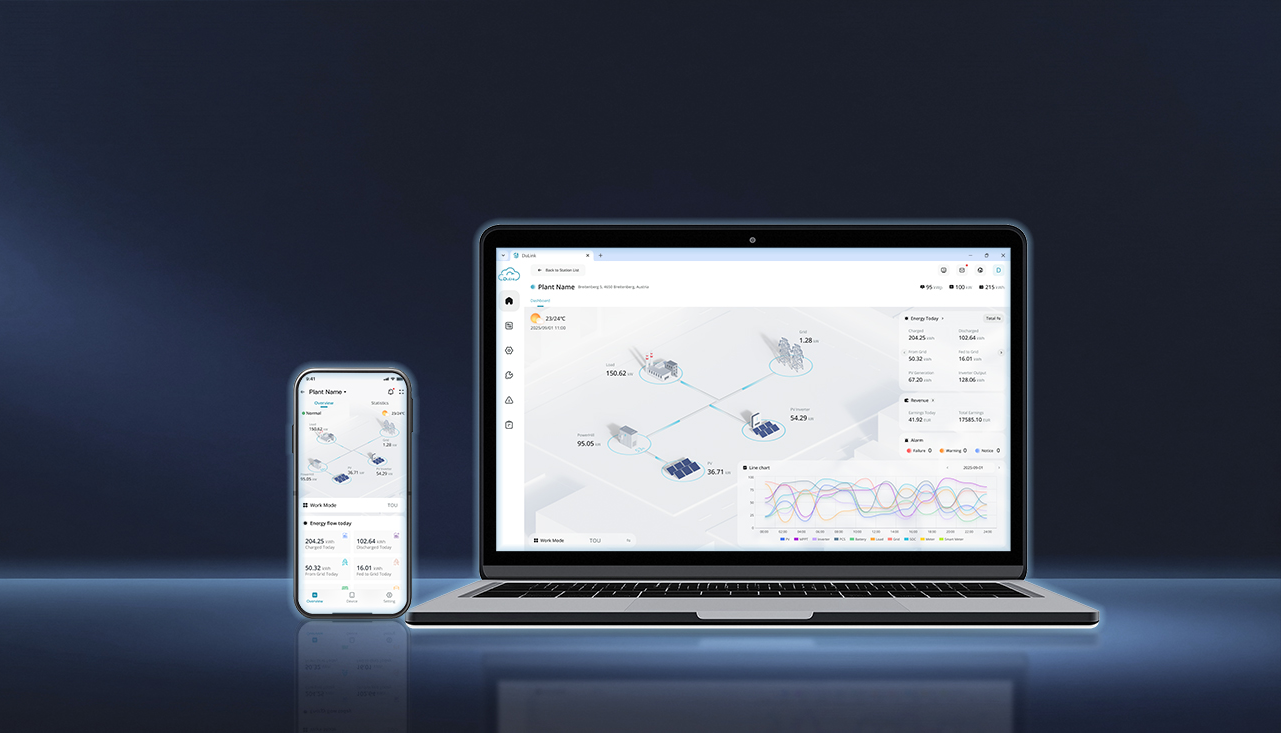
Dunext’s DuLink platform supports real-time monitoring of individual battery-cell voltage and temperature. It also provides one-click fault reporting, automatic log collection, and access to technical assistance. These functions help maintenance personnel investigate abnormal battery behavior.
For example, technicians can compare an affected cell’s measurements with other cells and review recent charging or discharging conditions. A significant deviation can justify closer inspection, but the cause still requires qualified technical evaluation.
Cell-level monitoring improves diagnostic information without guaranteeing advance prediction of future failures.
Energy Optimization and Maintenance Procedures
DuLink also visualizes generation, electricity consumption, energy flows, and revenue-related operating information.
Its AI-based analytical functions provide recommendations for optimizing energy usage. Centralized asset management helps oversee multiple storage installations. These capabilities support energy management and battery operations.
The confirmed functions do not establish general-purpose predictive maintenance for unrelated industrial machinery. A practical response process begins by checking whether an alarm represents a real operating condition.
Technicians then compare historical measurements, review equipment loading, and determine whether inspection or corrective action is required.
Data quality deserves particular attention. Missing measurements, inconsistent timestamps, and incomplete maintenance records can distort trends and reduce the reliability of analytical conclusions.
An energy management system works most effectively when combined with appropriate operating procedures and qualified personnel. Energy monitoring systems support better technical decisions, but they do not replace equipment-specific maintenance programs.
Energy Monitoring and Equipment Failure Prediction
Energy monitoring helps identify abnormal electrical conditions, investigate faults, and organize maintenance activities. Accurate failure prediction requires additional equipment-specific models, reliable data, and demonstrated performance.
Dunext provides DuLink for battery monitoring, fault reporting, and energy optimization. These verified capabilities support storage operation without establishing universal industrial machinery failure prediction.
