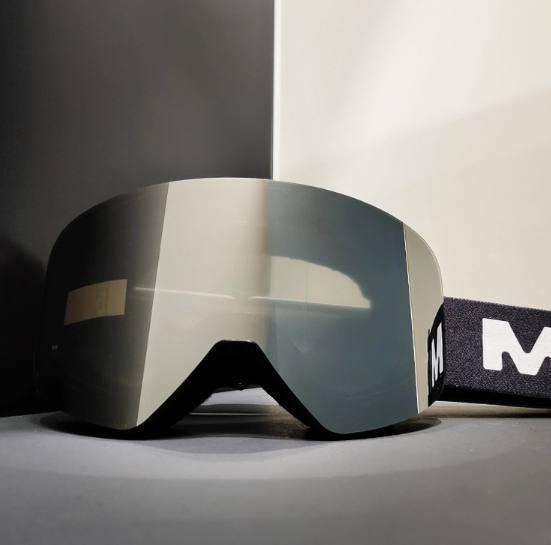
OTG snow goggles solve a specific fitting problem: skiers need room for their everyday glasses beneath a protective goggle frame. Yet OTG products vary considerably in fit. Pressure, airflow problems, and difficult removal often emerge during trials.
For ski retailers, distributors, and club purchasing teams, sourcing prescription ski goggles means checking more than the OTG label. The useful questions concern eyeglass clearance, fog behavior, lens changes, and repeatable fit across customer groups. Use those questions when requesting samples.
Will Customers’ Glasses Fit Without Pressure?
Begin with the prescription frames that customers actually wear. Measure total frame width, lens height, and temple thickness. Ask the supplier for usable internal clearance rather than relying only on the outside width of the goggles. Foam may still press against eyeglass arms.
During fitting, have testers put on their glasses first, followed by the goggles and helmet. Check whether the temples bend inward, the glasses slide down, or the goggles lift away from the cheeks. Repeat the test while turning the head. Brief comfort does not indicate lasting comfort.
Removal matters too. Ask testers to take off the goggles with gloves on. Their glasses should remain in place rather than being pulled away with the goggle frame. Record which eyeglass styles fail the test; this helps retail staff explain compatibility.
Where Does Moisture Collect?
A fog-resistant outer lens does not make the prescription glasses underneath fog-resistant. Breath rising from a neck gaiter, moisture from the face, and limited ventilation can cloud either surface. Buyers should therefore distinguish fogging on the goggle lens from fogging on the wearer’s own glasses.
Test samples during transitions between indoor warmth and cold outdoor conditions. Include walking, standing still, and wearing a face covering. Note when condensation appears and how quickly visibility returns. Identify combinations that repeatedly cause problems.
Ask which anti-fog construction is supplied and whether the test evidence applies to that lens configuration. Request cleaning instructions. Retailers need to explain proper care because wiping certain coated inner surfaces aggressively can damage their treatment.
Can the Lens Suit the Intended Terrain?
OTG compatibility addresses prescription frames, not changing light. A lens comfortable in bright sun may make shaded trails harder to read. When assessing the best prescription ski goggles for a retail range, compare the intended weather conditions with the actual lens choices instead of treating one tint as universal.
Request visible light transmission information for each proposed lens, if available, and ask how the supplier distinguishes clear, bright-weather, and low-light options. Polarized and photochromic lenses also require separate evaluation. Polarization can affect the appearance of some displays or reflective patches, while photochromic response depends on operating conditions.
If lenses are interchangeable, perform several changes while wearing gloves. Check alignment, retention, and whether touching the inner surface is difficult to avoid. Magnetic attachment may simplify handling, but buyers still need to verify that the lens seats correctly after every change.
What Does the Sample Reveal About Construction?
Once the fitting and lens criteria are defined, a specific model becomes easier to assess. YIJIA Optical offers the YH693, an OTG-compatible snow goggle with a cylindrical lens and interchangeable magnetic lens system. Its frameless-style appearance is a design feature; buyers should judge the usable view and fit during testing rather than assuming that appearance guarantees either.
The model uses a flexible TPU frame, a soft nose guard, and an elastic non-slip strap. Single-, double-, or triple-layer high-density foam options allow buyers to compare face contact and moisture absorption. Available lens choices include polycarbonate, polarized, photochromic, and high-contrast versions. Confirm which specifications belong to the exact sample supplied.
Its listed functions include UV400 protection, anti-fog and anti-scratch features, glare reduction, and impact resistance. Such descriptions are a starting point for evaluation, not a substitute for reports. Ask for applicable test methods and results, especially when supplying clubs or customers with formal purchasing requirements.
What Must Be Agreed Before Production?
Prepare a specification sheet covering intended users, compatible eyeglass dimensions, lens version, foam layers, strap design, color, and logo placement. Keep the approved sample beside this sheet. For private-label orders, distinguish cosmetic customization from changes that could affect fit or optical performance.
Next, agree on the sampling process, acceptance criteria, and production inspection points. Check how the supplier records lens defects, strap attachment issues, and assembly differences. For prescription ski goggles, an approved appearance is not enough if later batches fit differently over the same eyeglass frames.
YIJIA Optical supports OEM and ODM projects, including design development and customization. Buyers can share their target market, order requirements, and trial findings for review. They should also confirm quantities and delivery arrangements for the selected configuration rather than applying a general factory timeline to every customized order.
Turn the Checklist Into a Buying Decision
The best prescription ski goggles are not defined by a single lens feature or fashionable shape. For an OTG range, the practical decision rests on demonstrated clearance, manageable fogging, suitable light options, and consistent sample construction. Testing several common eyeglass frames reveals more than a product photograph can.
Before placing an order, keep the final sample, test notes, agreed specifications, and inspection criteria together. These records help purchasing teams compare offers and help retailers describe compatibility accurately. They also give the manufacturer concrete issues to resolve before production begins.
