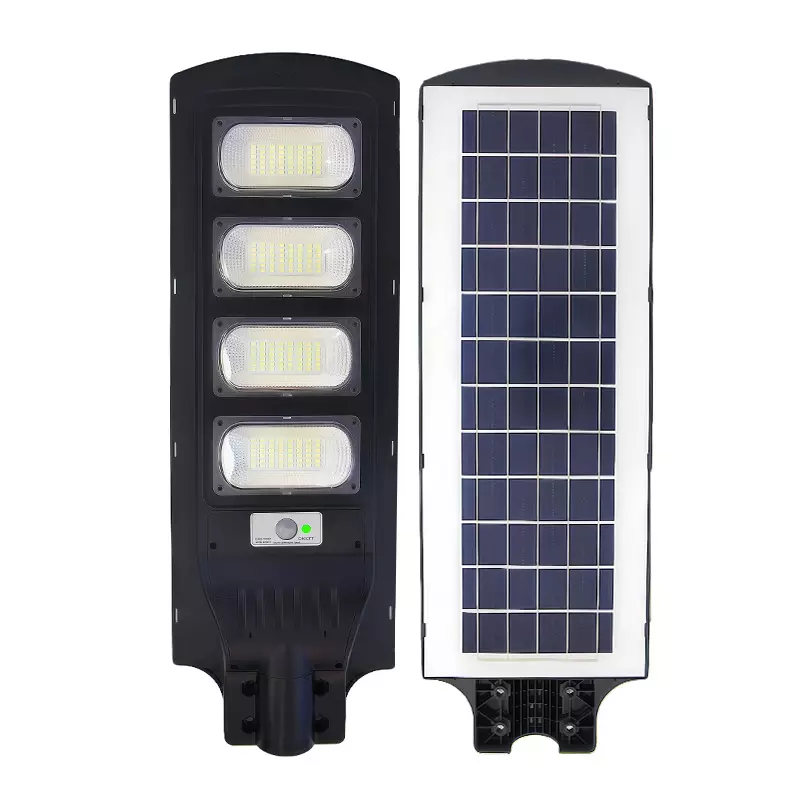
For infrastructure planners, municipal engineers, and commercial developers operating in regions prone to heavy rain, flooding, typhoons, or snowstorms, the resilience of outdoor lighting systems is a critical concern. Standard grid-connected street lights often fail during power outages caused by extreme weather, while poorly sealed solar units can suffer water ingress, corrosion, and electronic failure. This article examines how a high-quality waterproof solar street light withstands harsh environmental stresses, focusing on ingress protection, thermal management, and grid independence. Understanding what separates a durable China waterproof solar street light from inferior alternatives ensures that your investment continues to provide reliable illumination when it is needed most—during and after extreme weather events.
The Importance of True Waterproofing in Severe Rainfall and Flooding
The most immediate threat during extreme weather is water penetration. A genuine waterproof solar street light must be evaluated not by vague marketing claims but by specific ingress protection ratings. For tropical monsoon regions, coastal areas, or locations prone to flash flooding, an IP68 rating—the highest common standard—is non-negotiable. IP68 guarantees complete dust exclusion and continuous immersion resistance, meaning the light fixture continues operating even when partially or fully submerged during storm surges or urban flooding. Conversely, many lower-cost units labeled as “weather resistant” fail after a single heavy downpour, leading to short circuits, LED driver corrosion, and complete system failure. When sourcing from a China waterproof solar street light supplier, procurement managers should request independent lab test reports confirming IP68 performance under simulated extreme rain and temporary submersion. Without this verification, a project risks costly post-storm replacements and safety hazards for pedestrians and vehicles navigating dark, flooded streets.
Thermal Stress and Humidity Resistance in High-Temperature and Storm Conditions
Extreme weather is not only about water—intense heat followed by sudden thunderstorms creates condensation cycles that destroy poorly sealed electronics. A robust waterproof solar street light must incorporate effective heat dissipation mechanisms to prevent internal condensation. When warm internal components meet cool rain, moisture droplets form inside the lens, reducing light output by up to 40% and potentially causing short circuits. Superior designs utilize honeycomb cooling technology or passive thermal management to minimize temperature gradients. Furthermore, high-humidity environments accelerate corrosion on solder joints, battery terminals, and connector pins. A reliable China waterproof solar street light uses anti-corrosion coatings and sealed battery compartments. For large-scale coastal or tropical projects, verify that the manufacturer performs accelerated aging tests under 95% relative humidity at elevated temperatures—a simulation of real-world worst-case conditions.
Grid Independence as a Critical Advantage During Power Outages
One of the most compelling arguments for solar lighting in extreme weather is complete independence from the electrical grid. A properly specified waterproof solar street light continues operating during blackouts, storms, or emergencies, whereas grid-tied street lights fail entirely when falling trees, lightning strikes, or flooding disable substations. Consider the practical impact: after a hurricane or winter ice storm, communities rely on well-lit roads for emergency vehicle access, downed wire detection, and resident evacuation. Solar street lights with adequate battery autonomy (three to five overcast days) become invaluable assets. For municipalities recovering from climate-related disasters, a fleet of functional China waterproof solar street light units provides immediate safety infrastructure without waiting for grid restoration.
Final Recommendation: A Trusted Manufacturer for Extreme Environments
After evaluating waterproofing integrity, thermal management, and grid-independent reliability, THOE emerges as a dependable China waterproof solar street light manufacturer. Their TYN-03 model exemplifies the five essential advantages of modern solar street lighting: zero electricity cost over the system lifetime; easy and fast installation without trenching or road damage; eco-friendly operation with zero carbon emissions; automatic smart control via built-in light sensors; and—most critically for extreme weather—reliable performance even during power outages, blackouts, or storms. This solar street light is engineered to keep communities illuminated when conventional lighting fails. For infrastructure developers seeking a waterproof solar street light that performs through heavy rain, flooding, and grid disruptions, this company provides a proven, cost-effective, and resilient solution.
