Dental laboratories and medical device manufacturers need components that fit specific anatomical features and functional requirements. Conventional manufacturing suits many parts, but complex geometries and frequent design changes can make tooling and machining less flexible. Metal additive manufacturing offers an alternative by producing components directly from digital models.
Using selective laser melting (SLM), a laser 3D printer selectively melts metal powder layer by layer. This process supports customized geometries and small production batches, making it relevant to dental laboratories, medical component suppliers, and research teams developing specialized metal parts.
How 3D Printing Supports Customized Components
Customization begins with the digital design. Dental professionals and medical engineers can use scans, imaging data, CAD models, and engineering specifications to develop component geometries for a defined application. After the design is prepared for printing, the manufacturing team evaluates orientation, support structures, and process parameters before building the part.
This workflow can support dental components such as crowns, bridges, and selected frameworks. In medical manufacturing, metal additive manufacturing can also support prototypes, surgical instruments, and specialized implant components, subject to material suitability and applicable regulatory requirements.
The main advantage is design flexibility. Internal features, curved surfaces, and geometries that are difficult to machine may be easier to produce through layer-based manufacturing. Engineers can also revise a digital model without commissioning an entirely new set of dedicated tools.
However, customization does not remove engineering constraints. Minimum feature sizes, support access, surface requirements, and post-processing allowances must be considered during design. A component that looks correct in CAD may still need adjustments to print reliably and achieve its intended fit.
Supporting Dental Laboratories and Medical Manufacturers
Dental production often involves multiple designs in relatively small quantities. Metal additive manufacturing can help laboratories organize these jobs digitally and arrange compatible components within a build. This can be useful when several crowns, bridges, or frameworks need to be produced in the same production cycle.
The practical benefit depends on more than the number of parts printed together. Build orientation, spacing, support removal, and finishing requirements influence throughput. Laboratories should assess the complete workflow, including design preparation, printing, separation, surface finishing, and final inspection.
For medical component manufacturers, the same technology can support prototyping and the production of specialized geometries. Engineers can evaluate a design, review the resulting component, and revise the digital model before proceeding with further development. This can be valuable during research and product development, when design iterations are expected.
Still, a successful prototype does not automatically qualify a component for clinical use. Intended use, material properties, manufacturing controls, cleaning, sterilization where applicable, and regulatory obligations must be addressed separately. These requirements should guide process planning from the beginning.
Selecting Materials and Maintaining Traceability
Material selection must reflect the component’s intended function. Titanium alloys are considered for applications where strength-to-weight performance is important. Cobalt-chromium alloys are widely used in dental metal applications, while certain stainless steel grades are suitable for components requiring corrosion resistance.
The exact alloy grade matters. Buyers should confirm its composition, applicable standards, and suitability for the intended application rather than relying only on a broad material category. They should also check whether the printer supplier can provide appropriate process parameters and technical support for the selected material.
Traceability connects the approved design to the finished component. For a dental framework, the laboratory can link the approved CAD file to a job identifier, preserve that link through printing and finishing, and check fit against the approved design. If a component needs revision, the team can identify the relevant design version and production record instead of relying on informal file names or memory.
This workflow can help laboratories manage customized orders and investigate deviations. Depending on the application, records may include design revisions, material batches, build parameters, finishing steps, and inspection results. The level of documentation should reflect the component’s intended use and applicable quality requirements.
Evaluating a Laser 3D Printer for Specialized Production
Producing 3D printed metal parts requires equipment suited to the component size, material, and expected volume. Buyers should review the usable build area, supported materials, layer thickness, process controls, powder handling, and available technical support.
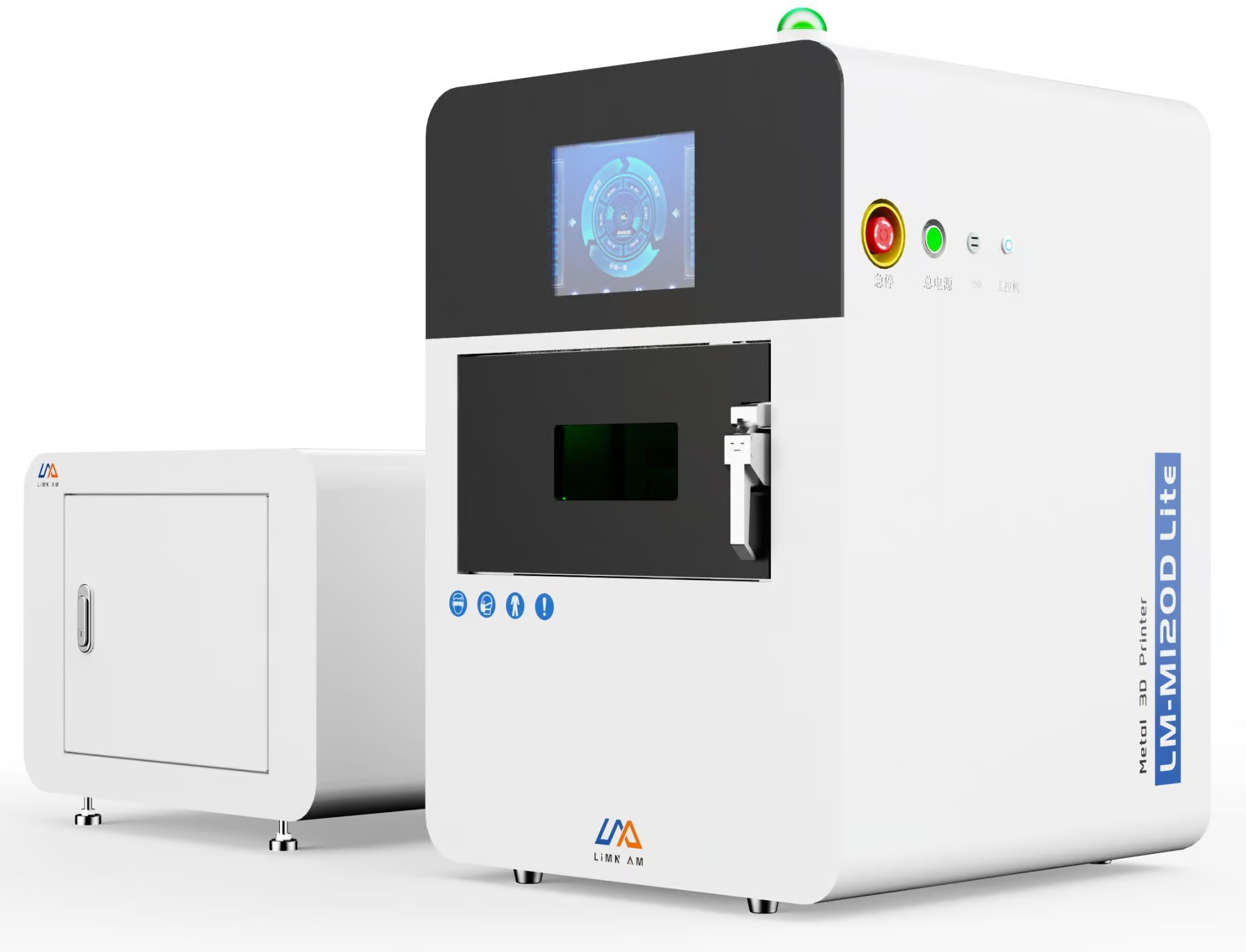
LiMN 3D’s LM-M120D Lite is a compact SLM system positioned for dental and small metal component applications. Its official product information lists a powder layer thickness of 20–60 μm and identifies cobalt-chromium alloys, stainless steel, and titanium alloys among the supported material categories. The product page also describes an integrated powder and filtration system and a touchscreen interface.
These features may be relevant to laboratories with limited space, but suitability depends on installation conditions, workflow, safety procedures, and production requirements. Buyers should confirm the quoted machine configuration and specific material grades with the supplier before purchase. The listed layer thickness is a process setting, not a guarantee of dimensional accuracy.
A practical evaluation should use representative component files. Trial builds can help establish whether the proposed setup meets requirements for geometry, finishing, production time, and inspection. This provides a more meaningful basis for equipment selection than relying on general claims about precision or productivity.
From Digital Design to Controlled Production
The value of metal additive manufacturing comes from connecting design flexibility with a controlled manufacturing process. Dental laboratories and medical manufacturers should define acceptance criteria early, document approved workflows, and verify that each component meets its intended requirements.
LiMN 3D provides metal additive manufacturing equipment and related technical support for specialized applications. Businesses can contact LiMN 3D to discuss component designs, material requirements, and suitable production approaches.
For customized dental and medical applications, successful implementation depends on matching the design, material, equipment, and validation process. Metal 3D printing can expand manufacturing options, but the finished component must still meet the technical and regulatory requirements of its intended use.
