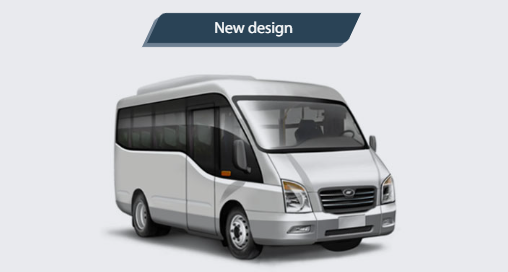
International fleet operations rarely fit neatly into one vehicle specification. Road conditions, payload expectations, regulatory requirements, climate, and service practices can vary considerably between markets, creating pressure for manufacturers and fleet operators to work together earlier in the development process. Effective automotive r&d therefore involves more than creating a vehicle and adapting it afterward; it requires communication between engineering teams, suppliers, and end users from the initial concept through validation. Wuling Motors has established integrated vehicle design capabilities covering styling, general layout, body, chassis, electrical systems, accessories, EIC systems, and vehicle performance.
Why International Fleet Projects Require Joint Development
Fleet operators understand the practical conditions under which vehicles earn their value. Engineers, meanwhile, translate those operating conditions into measurable requirements involving dimensions, durability, energy use, handling, and serviceability. Bringing these perspectives together early can reduce the gap between theoretical specifications and actual fleet needs.
Market differences make this cooperation particularly valuable. A vehicle intended for dense urban distribution may face narrow streets and frequent stops, while another operating in industrial areas could encounter heavier loads or rougher surfaces. Regulatory requirements can also differ, affecting safety systems, emissions performance, electrical architecture, and documentation.
Rather than treating customization as an afterthought, collaborative development can establish application requirements before the architecture is fixed. Such an approach gives automotive engineering teams a clearer understanding of which characteristics need to remain standardized and which areas may require regional adaptation.
Creating A Common Engineering Framework
Successful collaboration depends on translating operational preferences into technical language. Terms such as “easy to maintain” or “suitable for heavy use” need to become measurable requirements involving service intervals, component accessibility, duty cycles, load conditions, or durability targets.
Digital design tools can support this process by allowing different teams to review vehicle concepts before physical prototypes are produced. Wuling’s technical center describes capabilities covering sketch and rendering design, CAS surface development, A-surface data design, scanning, and reverse engineering.
Simulation provides another layer of communication. Structural strength, durability, NVH, collision safety, multi-body dynamics, and computational fluid dynamics can be assessed during development, helping teams identify potential conflicts before moving deeper into physical validation.
Connecting Vehicle Design With Local Operating Conditions
International fleet programs often require a balance between platform commonality and market-specific requirements. Excessive variation can increase complexity, while insufficient adaptation may leave a vehicle poorly matched to its working environment.
Climate is one example. Temperature affects battery behavior, thermal management, material performance, and cabin requirements. Road quality introduces another variable, particularly for fleets operating across mixed surfaces where suspension and structural durability become important.
Service infrastructure should also influence development decisions. Parts availability, diagnostic equipment, technician training, and maintenance procedures can affect vehicle uptime just as much as the underlying mechanical design. Broader automotive r&d planning can incorporate these operational factors before production specifications are finalized.
From Prototype Validation To Fleet Feedback
Physical testing remains essential because real-world vehicle behavior involves interactions that cannot always be captured through individual simulations. Prototype evaluation can examine braking, vehicle dynamics, road durability, NVH, energy economy, and component durability under controlled conditions.
Wuling’s technical center operates seven professional laboratories covering areas such as vehicle performance and durability, power batteries, motors, EIC joint calibration, electrical performance, chassis, and body development. The facilities support testing and matching of key vehicle and new-energy systems.
Fleet feedback adds another dimension once vehicles enter practical operation. Information about recurring maintenance issues, route conditions, driver observations, and component wear can return to development teams and inform later revisions. This creates a feedback loop in which automotive engineering becomes progressively more connected to actual usage rather than ending at vehicle launch.
Building A Scalable Collaboration Model
A workable international development model needs clear responsibilities. The manufacturer may handle architecture, engineering validation, and production integration, while fleet partners contribute route data, operating requirements, and market-specific knowledge. Suppliers can contribute component expertise where specialized systems are involved.
Prototype programs can then serve as a bridge between concept and volume deployment. Wuling’s trial-production workshop includes areas for model processing, sample production, body and chassis prototype work, welding, assembly, debugging, and inspection, with more than 100 trial-production pieces of equipment across more than 40 types.
Such infrastructure can support staged development: define requirements, build prototypes, conduct testing, collect operational feedback, and refine the specification before wider deployment. This structure can be particularly useful when fleet requirements differ between countries but share a common vehicle platform.
Turning Cooperation Into Long-Term Fleet Value
International collaboration works best when development decisions remain tied to measurable operating needs. Vehicle dimensions, payload, durability, energy consumption, electronics, and maintenance access each contribute to fleet performance, yet none should be considered independently from the intended duty cycle.
A mature development relationship also extends beyond the initial vehicle program. Market requirements can change, new propulsion technologies may become available, and fleet data can reveal opportunities for refinement. Continuous communication gives manufacturers and operators a mechanism for responding to those changes without abandoning the underlying platform.
Wuling Motors‘ integrated capabilities provide a relevant example of how vehicle development can connect styling, chassis, body, electrical architecture, EIC systems, simulation, testing, and prototype production within one broader engineering framework. For international fleet operators, such integration can make collaborative development more structured, allowing engineering decisions to reflect both technical requirements and the realities of different markets.
