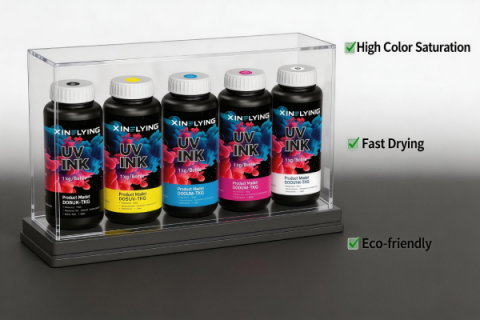
In the demanding environment of commercial printing, maintaining maximum equipment uptime is the absolute primary directive for production managers. For B2B print shops operating high-speed flatbed or roll-to-roll ultraviolet curing systems, profit margins rely heavily on the continuous, flawless operation of industrial printheads. While significant attention is rightfully dedicated to software calibration and mechanical maintenance, a surprising number of catastrophic equipment failures originate during the seemingly simple process of consumable replenishment. Handling specialized photopolymer fluids requires strict adherence to precise chemical and environmental protocols. A single procedural error during a refill can lead to irreversible printhead clogs, ruptured dampers, and thousands of dollars in lost productivity and replacement parts. By implementing rigorous standardization when dealing with high-performance UV Ink, commercial facilities can safeguard their expensive hardware investments. Understanding the scientific mechanics behind common refilling mistakes is absolutely essential for machine operators and facility supervisors aiming to eliminate preventable downtime and ensure consistent, high-fidelity output for their most demanding corporate clients.
Chemical Contamination Risks When Refilling UV Ink
The most severe error in the replenishment workflow is the introduction of chemical contaminants, which frequently occurs when operators mix different formulations or fail to properly flush ink delivery systems between brand changeovers. Ultraviolet curing fluids are highly complex, precisely balanced chemical suspensions consisting of specific monomers, oligomers, photoinitiators, and pigment particles. Even minute variations in these chemical profiles can cause severe adverse reactions if improperly mixed. When a technician tops off a reservoir with an incompatible batch, it can trigger an unintended chemical cross-linking reaction within the sub-tanks or internal lines. This localized polymerization creates a sludge-like viscosity or microscopic solid gels that will quickly bypass standard filtration meshes and permanently destroy the delicate piezoelectric nozzles of an industrial printhead. Furthermore, operators must strictly avoid using unapproved cleaning solvents near the refilling station, as lingering solvent vapors can prematurely break down the binder polymers before they ever reach the substrate. To prevent this catastrophic contamination, B2B facilities must establish rigid inventory controls, ensuring that only specified, matching batches are utilized, and that operators use dedicated, color-coded funnels for each specific fluid channel.
Unintended Polymerization from Ambient Light Exposure
Another critical oversight frequently observed in commercial printing environments is the failure to properly shield fluids from ambient ultraviolet light during the refilling procedure. The core technology driving these industrial systems relies heavily on photoinitiators that react instantly to specific nanometer wavelengths. However, standard overhead fluorescent lighting and indirect natural sunlight streaming through factory windows contain enough stray ultraviolet radiation to initiate a slow, low-level curing process. When technicians expose an open bottle of uv ink for printer systems to the ambient factory environment for extended periods, the fluid begins to thicken microscopically. While this premature polymerization might not be immediately visible to the naked eye, the altered viscosity wreaks havoc on the internal delivery system. It overworks the negative pressure pumps and causes inconsistent jetting trajectories, leading to severe banding and color shifts in the final printed product. To mitigate this pervasive risk, operators must execute the refilling process swiftly and utilize opaque, UV-blocking delivery lines and funnels. Bulk storage containers must be immediately sealed and returned to a climate-controlled, light-proof storage cabinet to maintain absolute chemical stability.
Inadequate Agitation and Titanium Dioxide Settling
In commercial direct-to-object and transfer applications, opaque white fluid is arguably the most critical component, serving as the foundational under-base that ensures brand color accuracy on dark or transparent substrates. However, white formulations utilize heavy titanium dioxide particles to achieve this necessary opacity. Due to their specific gravity, these particles will naturally separate and settle at the bottom of the container during storage. A remarkably common error is pouring the fluid into the machine’s sub-tank without subjecting the bottle to rigorous, mechanical agitation beforehand. If the heavier pigments are left resting at the bottom of the bottle, the machine receives a diluted, binder-heavy mixture, resulting in weak, translucent prints that will be immediately rejected by corporate quality control inspectors. Conversely, when the concentrated sludge at the bottom of the unmixed bottle is finally poured in, it introduces an overwhelming density of titanium dioxide that quickly clogs the in-line filters and starves the printhead. Production managers must enforce strict agitation protocols, utilizing automated rotary shakers to guarantee a homogenized suspension.
Air Introduction and Meniscus Depressurization
The final operational hazard involves the mechanical technique of the pour itself, specifically the dangerous introduction of micro-bubbles into the fluid delivery network. Industrial printheads operate on a highly sensitive negative pressure system designed to maintain a perfect meniscus at the nozzle plate. When an operator pours fluids aggressively or allows the fluid to splash violently into the main reservoir, it traps microscopic pockets of air within the viscous liquid. These air bubbles travel through the lines and eventually lodge inside the printhead’s internal firing chambers. Because air compresses under pressure while liquid does not, these bubbles act as shock absorbers, absorbing the piezoelectric firing pulse and preventing the nozzle from jetting the droplet. This phenomenon, known as nozzle dropout, forces the operator to perform aggressive, wasteful purging cycles to clear the trapped air, consuming expensive consumables in the process. By training staff to pour fluids slowly down the interior sidewall of the reservoir, commercial facilities can maintain perfect fluid dynamics, protect their hardware, and maximize their overall B2B operational profitability.
