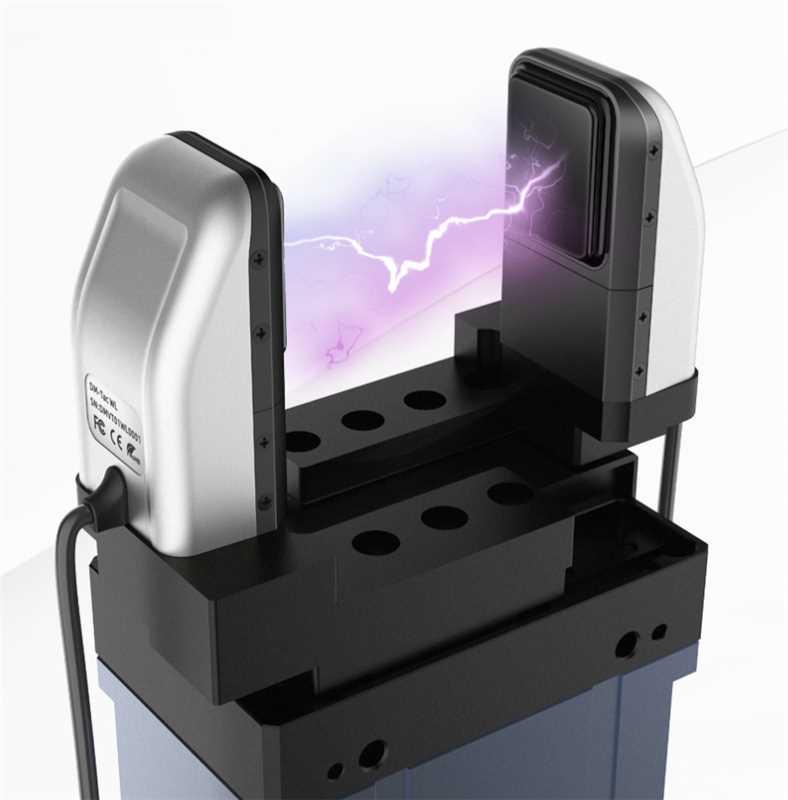
At its core, a mechanical gripper is a robot’s hand, enabling it to physically interact with the world. These devices are fundamental for tasks from assembly and packaging to surgery and home assistance. The true sophistication, however, emerges when these grippers are equipped with advanced tactile sensing capabilities, transforming simple grasping into intelligent manipulation. Companies like Daimon are at the forefront of this evolution, developing systems that allow robots to perceive touch with remarkable fidelity, bridging the gap between rigid automation and adaptive, sensitive handling for both industrial and service applications.
Daimon Grippers with Tactile Sensing
Integrating sophisticated tactile sensing into a mechanical gripper fundamentally changes its role. Instead of merely closing on a pre-programmed point, the gripper can feel its way. Sensors with high spatial resolution, some containing over 40,000 sensing units per square centimeter, map the contact shape and pressure distribution in real time. This allows the robot to confirm a secure grip, detect slip before an object falls, and adjust its hold on fragile items like eggs or electronic components. This sensory feedback is the first critical step in moving from blind automation to responsive interaction, enabling robots to handle unpredictable environments and variable objects with newfound confidence.
Precision Handling through Tactile Feedback
The data from tactile sensors directly enables precision handling. By capturing multiple sensing modalities—such as normal force, shear force, and vibration—the system provides a rich stream of information. A robot gripper can then perform delicate tasks like inserting a peg into a hole with sub-millimeter alignment, polishing a curved surface with consistent pressure, or assembling intricate mechanisms. Daimon’s focus on this technology highlights how real-time force measurement and control are not just features but necessities for next-generation automation. Their development in this area provides the building blocks for systems that can work alongside humans or perform complex, dexterous tasks previously deemed too difficult for machines, directly answering the need for more versatile and sensitive robotic solutions.
Mechanical Grippers for Object Detection
Beyond just gripping, a mechanized hand with tactile intelligence becomes a powerful tool for object detection and inspection. As the gripper makes contact, the sensor array instantly characterizes the object’s texture, stiffness, and even structural integrity. This allows the robot to identify a part by its material properties, sort items by compliance, or check for manufacturing defects like cracks or voids. In logistics, a robot can verify it has picked the correct item from a bin based on its feel. This capability transforms the mechanical gripper from an end-effector into a perceptive instrument, making robotic systems more autonomous and reducing the reliance on separate, often vision-only, inspection stations. It is a clear example of how tactile sensing can boost smart manufacturing by adding a critical layer of process verification and quality control.
Conclusion
A mechanical gripper is the essential interface between a robot’s intelligence and the physical task it must perform. Its purpose evolves from simple pick-and-place to sophisticated, perception-driven manipulation when enhanced with tactile sensing. This integration enables adaptability, precision, and quality assurance across countless sectors. For organizations seeking to implement such advanced robotic capabilities, partnering with innovators who provide both the technology and the expertise is crucial. Exploring the solutions from Daimon can offer a pathway to integrating this transformative tactile iintelligence into both industrial and service robotic applications.
