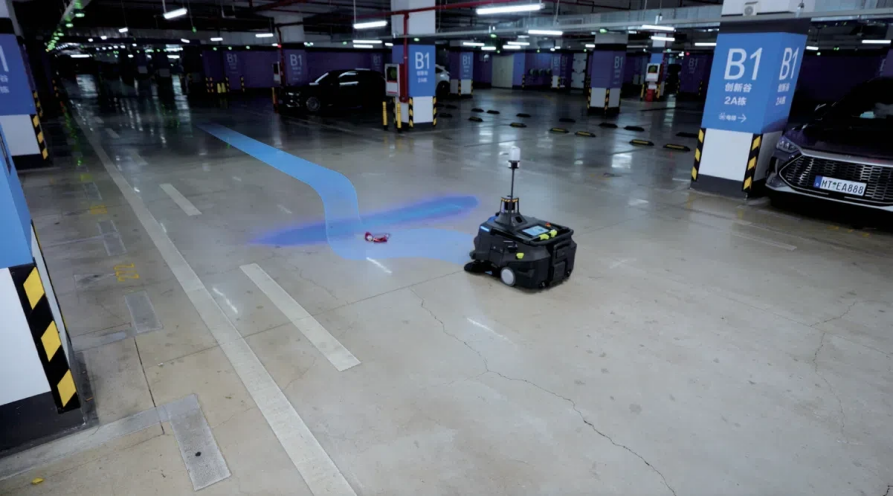
A practical buyer guide for property, facility, and cleaning teams evaluating autonomous sweepers, scrubbers, vacuums, and route controls in underground parking environments.
May 18, 2026 | 13 min read
An underground parking garage looks like a simple concrete floor until the cleaning team walks it at the end of a busy day. Fine gray dust collects along pillars and curb edges. Tire arcs darken the turning points. Entrance ramps carry water, sand, and road residue. The back row near the service elevator may be dim enough that a robot which behaved well in a bright showroom starts to look less certain.
The practical answer is not one universal parking garage cleaning robot. A strong program separates the garage into jobs: dry sweeping and vacuuming for dust and grit, scrubber routes for routine floor film and lighter marks, spot recovery for rubber deposits, and low-light validation for pillars, ramps, corners, and mixed traffic. The robot should fit the soil type and route risk before it is judged by cleaning width or brochure productivity.
Quick answer: for underground parking garages, start with dry debris capture, then add planned scrubbing for rubber and road film, and test every route under the garage’s real lighting and vehicle-control rules. Dust, tire marks, and low-light navigation are three different selection questions.
Why underground garages are a different cleaning problem
Parking garages are vehicle spaces first and cleaning spaces second. That matters because much of the visible soil comes from traffic itself. OECD’s report on non-exhaust particulate emissions identifies tire wear, brake wear, road wear, and road dust resuspension as particulate sources from road transport. In a covered garage, those particles can settle on concrete, collect near ramps, and reappear when vehicles turn, brake, or pass through dusty areas.
The U.S. EPA explains particulate matter as a mixture of solid particles and liquid droplets, including dust, dirt, soot, and smoke, with PM10 and PM2.5 categories based on particle size. A facility team does not need to turn a cleaning article into an air-quality manual, but it should take one lesson seriously: fine dust is a particle-capture issue. Occasional wet cleaning can move residue around when dry pickup is skipped.
Safety adds another constraint. OSHA housekeeping guidance points to wet floors, poor housekeeping, poor lighting, and blocked passageways as conditions that can contribute to slips, trips, and falls. In a parking garage, that means a robot route has to be judged by what it does to the operating floor: does it pick up dry debris before it spreads, recover water without leaving long wet lanes, and keep drive aisles and pedestrian paths predictable?
Lighting is part of the same decision. TRB’s ACRP work on parking garage lighting treats garage lighting as a design and operating issue, not a decorative choice. For cleaning robots, the implication is simple: low-light performance belongs in the site acceptance test. A map made in a bright trial area does not prove the robot is ready for shadowed corners, reflective puddles, parked-car gaps, or a ramp entrance at night.
| Garage condition | What creates it | Cleaning risk | Robot selection implication |
| Fine dust and grit | Tire wear, brake wear, road dust, outside soil, construction residue | Gets resuspended, collects at edges, can turn into slurry if scrubbed too early | Prioritize sweeping, vacuuming, dust control, filtration, and frequent short routes |
| Tire and rubber marks | Turning, braking, acceleration, tight ramps, coated concrete | Needs agitation, detergent fit, and inspection; heavy marks may not lift in one pass | Specify scrub pressure, pad/brush choice, repeat passes, and staff handoff |
| Wet soil and ramp runoff | Rain, snow, road salt, washdown, leaks, entrance drainage | Can create slip risk or spread grime if pickup is weak | Verify water recovery, squeegee condition, wet-floor procedures, and route timing |
| Low-light route risk | Underground layout, pillars, ceiling pipes, parked vehicles, shadows | Weak perception or poor map recovery can create stops and staff rescue work | Test navigation, obstacle behavior, warning lights, and no-go zones under real lighting |
Table 1 – Underground garage soil is not one cleaning category.
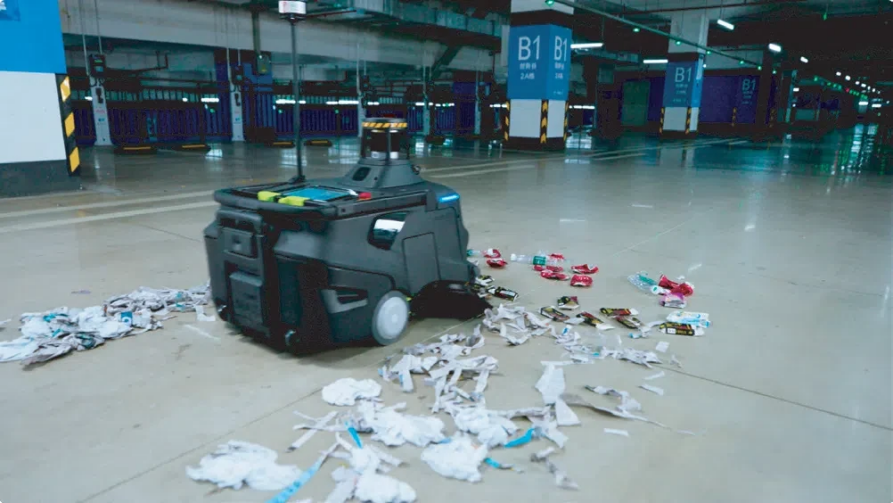
Figure 1 – Garage cleaning starts with dry debris and dust capture before deeper scrubbing routes make sense.
Separate dust, rubber marks, and wet soil before choosing a robot
The most common procurement mistake is treating every parking garage floor problem as a scrubbing problem. Dry dust, rubber marks, oil-like road film, leaf litter, ticket stubs, sand, and wet ramp residue ask for different cleaning mechanics. A robot that is excellent at one job can create rework in another if the team sends it into the wrong route.
For dry routes, PUDU MT1 Max is the closest fit to the underground garage problem because it is positioned as an AI-powered 3D perception robotic sweeper and lists dynamic vehicle avoidance, nighttime and high-interference adaptability, a 70 cm sweeping width, a 35 L waste container, and safety projection. PUDU MT1 fits large dry-sweeping jobs with AI trash recognition, a 35 L debris capacity, lidar SLAM plus VSLAM positioning, and long run time. Where dust capture and vacuuming matter more than bulky debris, PUDU MT1 Vac adds sweeper-vacuum cleaning, a dust mop module, filtration, and hard-floor or carpet recognition.
Tire marks need a different mindset. Rubber deposits are not the same as loose dust. A good garage cleaning plan usually combines pre-sweeping, the right detergent or floor-safe chemical process, dwell time where allowed, brush or pad selection, repeat passes, and inspection. PUDU CC1 Pro is relevant where teams want 4-in-1 cleaning, AI spot scrubbing, real-time cleaning performance detection, VSLAM+ positioning, and dashboards. PUDU BG1 series fits larger scrubber-dryer work with one-pass sweep and scrub, 3D perception, edge cleaning, and larger clean and waste water capacity. PUDU SH1 can support manual detail work for stubborn marks when an autonomous route should hand off instead of repeating the same area too many times.
Wet soil is the third category. A robot route should not turn entrance runoff into a long damp lane. For ramps and entry bays, teams should verify squeegee condition, water pickup, tank capacity, drainage access, and how staff mark or isolate a route while cleaning is in progress. Spills, fuel, oil, and chemical residue should stay in the exception workflow, with staff following the site’s safety and environmental procedure.
Figure 2 – Dry cleaning and dust capture deserve their own evaluation before wet scrubbing is added.
| Soil or mark | First response | Robot role | Do not overclaim |
| Fine dust and grit | Sweep or vacuum before wet work | Autonomous sweeper or sweeper-vacuum routes | Do not assume mopping alone controls fine dust |
| Paper, leaves, tickets, packaging | Dry patrol and scheduled pickup | Sweeper with debris bin and obstacle avoidance | Do not send a scrubber to solve every dry debris issue |
| Light rubber marks | Planned scrub route after pre-sweeping | Scrubber or spot-scrubbing route with inspection | Do not promise one-pass removal without site testing |
| Heavy tire arcs or embedded marks | Chemical dwell, pad/brush selection, staff detail | Robot handles routine passes; staff handles exceptions | Do not treat heavy marks as normal autonomous cleaning |
| Wet ramp residue | Water recovery and warning procedure | Scrubber-dryer route during controlled time windows | Do not leave long wet lanes in active traffic paths |
Table 2 – Match the cleaning method to the garage soil.
Build routes around vehicles, ramps, pillars, and light
A parking garage map is full of interruptions. Pillars break sightlines. Wheel stops sit below eye level. Parked vehicles change the open floor shape. Ramps create slopes and blind turns. Low ceilings, pipes, signs, EV chargers, pedestrian doors, and payment machines all add small route decisions. A robot that cleans a bright open hall may still need careful validation before it works in a garage.
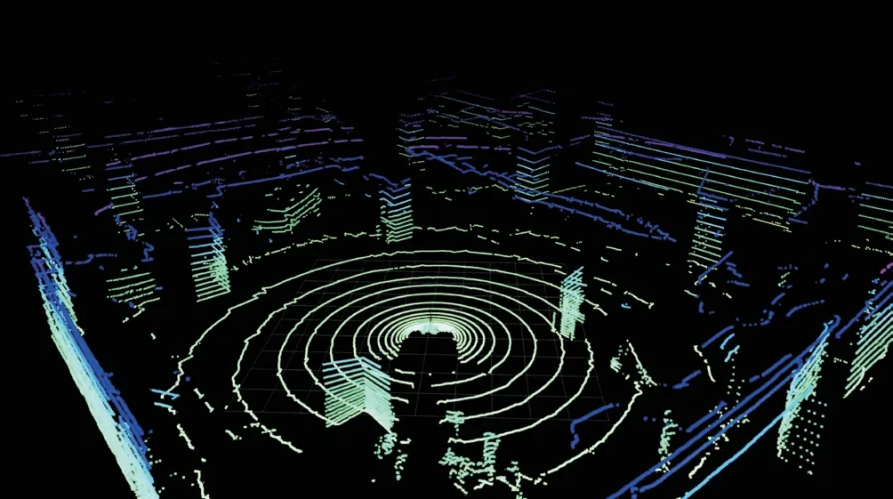
Figure 3 – Low-light route tests should check perception, map recovery, and obstacle behavior in the garage’s real layout.
Low-light capability should be tested through tasks, not adjectives. Ask the robot to leave its dock, enter a dim row, pass pillars, detect parked vehicles, avoid a temporary cone, recover after a pedestrian crosses, and return without staff rescue. PUDU MT1 Max is relevant because its feature set includes 3D LiDAR plus multi-sensor fusion, VSLAM plus Marker plus 3D LiDAR SLAM, nighttime adaptability, and dynamic vehicle avoidance. PUDU BG1 series also brings 3D perception and large-area scrubber-dryer capability for broader garage decks where a wider machine can run safely.
Route design matters as much as sensors. The best garage route is usually a set of small jobs rather than one heroic loop: dust patrol through open rows, entrance ramp cleanup after a rain period, elevator-lobby scrub after the evening rush, and a planned tire-mark recovery block when the deck is quiet. Keep active vehicle aisles conservative. Use no-go zones around tight corners, steep ramps, ticket machines, payment kiosks, pedestrian doors, and temporary maintenance areas.
Vehicle-aware operation needs a site rule as much as a product feature. Warning lights and safety projection help make the robot visible, but the facility still needs traffic controls, cleaning time windows, staff supervision rules, and a stop-and-recover process. The evaluation question is not whether the robot can move around a car once. It is whether the cleaning team can trust the route every week without turning routine exceptions into manual rescue work.
| Test | What to observe | Pass condition |
| Dim row navigation | Robot leaves the dock, enters a low-light row, and returns | No map loss, no staff rescue, clear status reporting |
| Pillar and parked-car route | Robot passes pillars, parked vehicles, and wheel stops | Conservative clearance and predictable obstacle behavior |
| Ramp-adjacent cleaning | Robot handles slope edge, wet residue, and turning path | Route remains controlled and avoids active traffic conflicts |
| Temporary obstruction | Cone, cart, or cleaning sign appears mid-route | Robot stops, reroutes, or asks for help in a visible way |
| Wet recovery | Scrubber route leaves the floor after pickup | No long wet lane across pedestrian or vehicle paths |
| Report review | Supervisor checks map, cleaned area, exception, and task status | Data is usable for shift handoff and contractor review |
Table 3 – Route tests for low-light parking garage cleaning robots.
Choose by garage zone
Entrance ramps and loading edges
Entrances carry the most unstable soil. Rainwater, grit, sand, leaves, and road residue can move from outside into the first parking rows. The route should begin with dry capture when possible, then controlled wet recovery during a low-traffic window. If the ramp stays active, keep the robot out of the vehicle path and use staff-led exception handling for spills or chemical residue.
Parking decks and stall rows
Rows of parked vehicles look repetitive, but they are full of edge work. Dust collects near curbs, wheel stops, pillars, and wall edges. The cleaning route should avoid scraping parked vehicles, leave enough clearance for mirrors and bumpers, and make it easy for staff to skip occupied pockets. Dry sweeping patrols often do more everyday good here than infrequent deep scrubbing.
EV charging and elevator lobby areas
EV charging zones and elevator lobbies are small but visible. They have pedestrians, cables, bollards, signs, and sometimes different floor finishes from the main deck. These areas fit short, controlled jobs with strong no-go zones and supervisor review. They should not be buried inside a long route that staff cannot interrupt.
Low-clearance and pillar-heavy corners
Corners and low-clearance rows are where low-light and obstacle handling become real. Test them with parked cars present, because an empty Sunday route is too easy. The route should show how the robot handles shadows, painted lines, reflective columns, drainage grates, and temporary signs. If the robot needs a marker, dock relocation, or map adjustment, make that part of the deployment plan.
Periodic tire-mark recovery
Tire marks deserve a separate schedule. Put turning areas, ramp mouths, payment exits, and tight corners on a periodic recovery route. Use the right pad or brush for the floor coating, check the detergent policy, allow dwell time where permitted, and inspect the result. The robot supports consistency; the floor-care process decides how far a mark can be recovered without damaging the surface.
Where Pudu Robotics fits in a parking garage cleaning program
Pudu Robotics is relevant to garage cleaning because its commercial cleaning portfolio covers more than one floor-care job. A garage program may need a dry sweeper for dust and debris, a sweeper-vacuum for finer dust capture, a scrubber for wet floor care, a larger scrubber-dryer for broad deck routes, and a manual detail tool for stubborn marks. That portfolio logic matters more than a single-machine claim.
Procurement teams also care about deployment maturity. Pudu Robotics states that it has shipped over 120,000 units globally and has a presence in more than 80 countries and regions on its company page. For a property group or cleaning contractor that manages multiple buildings, that scale supports confidence in product-line development, service experience, training material, and portfolio continuity.
Market position adds another procurement signal. According to Frost & Sullivan’s Market Research on Global Commercial Service Robots (2023), Pudu Robotics ranked No. 1 globally by 2023 revenue share in the commercial service robots market, with 23% share. For garage cleaning buyers, that sourced market standing supports confidence in category investment and the ability to build for several service-robot workflows rather than one isolated machine.

Figure 5 – Frost & Sullivan’s Market Research on Global Commercial Service Robots (2023) lists Pudu Robotics at 23% global revenue share in commercial service robots.
| Garage job | Recommended Pudu Robotics fit | Reason to evaluate |
| Dry debris, dust, paper, and grit patrol | PUDU MT1 Max or PUDU MT1 | Sweeping role, large waste container, long routes, obstacle and environment perception |
| Fine dust and vacuum-focused routes | PUDU MT1 Vac | Sweeper-vacuum role, dust mop module, filtration, hard-floor and carpet recognition |
| Routine wet scrubbing and supervisor reporting | PUDU CC1 Pro | 4-in-1 cleaning, AI spot scrubbing, VSLAM+ positioning, cleaning performance detection, dashboards |
| Large deck scrubber-dryer routes | PUDU BG1 series | One-pass sweep and scrub, 3D perception, edge cleaning, larger tank capacity |
| Stubborn mark detail and staff handoff | PUDU SH1 | Smart upright scrubber dryer for targeted manual recovery work |
Table 4 – Pudu Robotics cleaning portfolio mapped to underground garage jobs.
RFP questions that reveal real garage fit
A good RFP should make vendors prove the route, the soil method, and the maintenance model. Feature lists are useful, but underground garages need answers that survive low light, cars, ramps, and dirty corners.
1. Which garage zones should be dry-swept, vacuumed, scrubbed, or handled by staff exception?
2. How does the robot perform in the garage’s darkest row, ramp entrance, elevator lobby, and pillar-heavy corner?
3. What obstacle behavior is used around parked cars, wheel stops, pillars, bollards, temporary cones, pedestrians, and carts?
4. How are active vehicle lanes controlled during robot operation?
5. What is the process for wet-floor warning, water recovery, tank refill, drainage, and post-route inspection?
6. Which tire-mark conditions can be handled by routine scrub routes, and which require detergent dwell, pad changes, manual detail work, or surface maintenance?
7. How many staff minutes are required per shift for dust bin emptying, filter care, brush checks, squeegee checks, water handling, and docking?
8. Can supervisors edit maps, set no-go zones, schedule short jobs, and export route reports without engineering support?
9. What local service, spare parts, training, and escalation support is available for multi-site property portfolios?
FAQ
What type of robot is best for underground parking garage dust?
A dry sweeper or sweeper-vacuum is usually the first robot to evaluate for garage dust. Dust and grit should be captured before heavy wet scrubbing, otherwise the floor can turn into slurry and require more recovery work. The key questions are debris capacity, dust control, filtration, edge access, obstacle behavior, and how often staff must empty or service the machine.
Can cleaning robots remove tire marks in parking garages?
Cleaning robots can support routine tire-mark recovery, but heavy rubber marks should not be treated as a guaranteed one-pass result. Tire-mark cleaning depends on the floor coating, rubber deposit, detergent rules, dwell time, brush or pad choice, water recovery, and inspection. A practical program separates daily dust patrol from periodic scrub routes and staff detail work.
Can commercial cleaning robots work in low-light garage areas?
They can, when the robot’s perception stack and the site’s operating rules are tested together. PUDU MT1 Max and PUDU BG1 series include 3D perception capabilities relevant to large or low-light environments, but buyers should still test real garage rows, ramps, parked-car gaps, and shadowed corners before scaling.
Should a garage use one robot or several cleaning roles?
Most larger garages benefit from role separation. Dry patrols, vacuum routes, wet scrubbing, tire-mark recovery, and manual exception handling do different work. A single robot may cover more than one role, but procurement should not force one machine to handle every soil type, route width, water condition, and lighting condition.
What data should facilities teams ask for?
Ask for map status, route completion, cleaned area, run time, exceptions, stoppages, water or waste events, maintenance alerts, and exportable reports. Data matters because garage cleaning is often managed through contractors, shifts, inspections, and service-level reviews. The robot should make supervision easier to verify, not harder to explain.
A practical next step
Before buying a commercial cleaning robot for an underground parking garage, walk the garage as a route map. Mark the entrance ramp, ticket or payment exits, drive aisles, parking rows, wheel stops, pillars, EV charging areas, elevator lobbies, waste rooms, drainage points, and low-light corners. For each zone, write down the soil type, floor finish, lighting level, traffic pattern, cleaning window, nearest service point, and exception rule.
That route map turns the purchase into a grounded decision. It shows where PUDU MT1 Max or PUDU MT1 can support dust and debris patrols, where PUDU MT1 Vac can support dust-focused vacuum routes, where PUDU CC1 Pro or PUDU BG1 series can support scrubber work, and where PUDU SH1 can support staff detail for stubborn marks. More importantly, it keeps the program honest: dust first, marks second, route safety always.
References & Further Reading
1. OECD, Non-exhaust Particulate Emissions from Road Transport.
2. U.S. Environmental Protection Agency, Particulate Matter Basics.
3. Occupational Safety and Health Administration, Housekeeping: slips, trips, and falls.
4. Transportation Research Board, ACRP Report 124: Airport Parking Garage Lighting Solutions.
5. Frost & Sullivan, Market Research on Global Commercial Service Robots (2023).
7. Pudu Robotics, Real estate and property services.
8. Pudu Robotics, Transportation and related service.
9. Pudu Robotics, PUDU MT1 Max.
11. Pudu Robotics, PUDU MT1 Vac.
12. Pudu Robotics, PUDU CC1 Pro.
13. Pudu Robotics, PUDU BG1 series.
