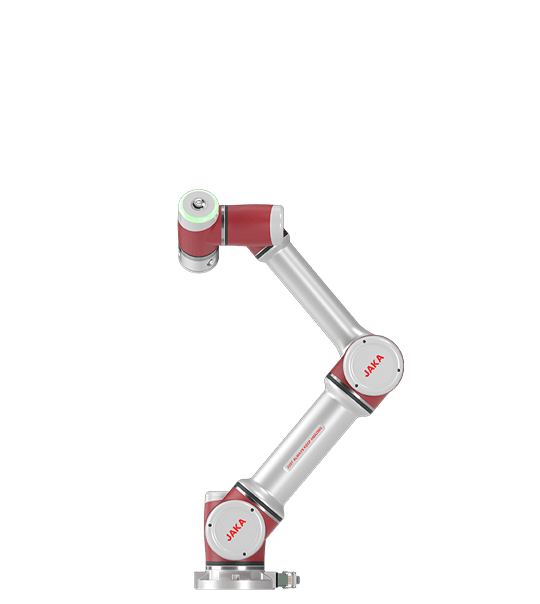
As manufacturing enters the final quarter of the 2020s, the “finishing touch” has become the most critical step in the production line. Whether it is a precision-engineered aerospace component or a high-aesthetic consumer electronics housing, the removal of burrs—those sharp, unwanted artifacts from machining—is no longer a job for the tired hands of a manual operator. The rise of the flexible robot arm has turned the once-gritty task of robotic deburring into a precise science.
Manual deburring is notoriously hazardous, involving repetitive strain, loud noise, and airborne particulates. By automating these finishing tasks with a high-performance industrial collaborative robot like the JAKA S5, manufacturers are achieving 100% consistency while significantly reducing scrap rates. Below, we explore the primary use cases where robotic deburring is redefining quality in 2026.
1. Die-Cast Aluminum Automotive Components
In the automotive sector, aluminum die casting is ubiquitous for engine blocks, transmission housings, and structural brackets. These parts often exit the mold with “flash”—excess material at the parting lines—and sharp burrs that can interfere with assembly or cause fluid leaks in pressure-sensitive systems.
Using a flexible robot arm equipped with force-controlled rotary tools, manufacturers can follow the complex 3D contours of a casting with surgical precision. Unlike manual grinding, robotic deburring ensures that the tool pressure remains constant, preventing “over-cutting” into the soft aluminum surface. This maintains the part’s dimensional integrity while creating a perfectly smooth edge ready for the next stage of CNC machining.
2. Aerospace Turbine Blades and Precision Machining
The aerospace industry operates under the world’s strictest tolerances. A single burr on a turbine blade can cause stress concentration points, leading to catastrophic failure under high temperatures and pressures.
A robotic deburring system integrated with a 6-axis arm allows for the delicate removal of microscopic burrs from high-performance alloys like Titanium and Inconel. By leveraging a perception-enhanced robot like the JAKA S5, the system can adapt to slight variations in part positioning. The robot’s high repeatability ensures that every blade in a batch of thousands receives an identical, aerospace-grade finish.
3. Plastic Injection Molded Housings
It isn’t just metal that requires finishing. Plastic components for medical devices, consumer electronics, and automotive interiors often have sharp flash at the mold closure points. Manual trimming with blades is dangerous for the worker and inconsistent for the product.
Robotic deburring for plastics utilizes specialized carbide bits or high-speed spindles to “shave” the flash without melting the material. The flexible robot arm can handle the intricate geometries of a modern smartphone chassis or a medical inhaler, ensuring a burr-free, aesthetically pleasing finish that is safe for the end-user to handle.
4. Hydraulic and Pneumatic Manifolds
Internal deburring is one of the most difficult manual tasks. Manifolds often have intersecting cross-holes where burrs can break off during operation, clogging valves and destroying expensive hydraulic systems.
A flexible robot arm can be programmed to navigate the internal “galleries” of a manifold. By using specialized abrasive brushes or electrochemical deburring tools, the robot ensures that every internal intersection is rounded and smooth. This “total deburring” approach is essential for the reliability of heavy machinery and specialized medical fluid-delivery systems.
5. Gear and Power Transmission Finishing
Gears require precise chamfering and deburring to ensure smooth mesh and long life. Manual deburring of gears is slow and prone to human error, which can lead to noisy operation or premature wear.
Automated systems use the flexible robot arm to present the gear to a fixed deburring station or move a deburring tool along each individual tooth. This process not only removes the burrs but can also apply a consistent chamfer, improving the gear’s durability. In 2026, many of these systems are integrated directly with the CNC gear-cutting machine, creating a seamless “produce-and-finish” loop.
The Precision Edge: Why the JAKA S5 is the Professional Choice
Deburring is a “contact-heavy” application. Success depends on the robot’s ability to “feel” the surface of the part and adjust its pressure in real-time. This is why the JAKA S5 has become the industry benchmark for precision finishing.
Technical Advantages of the JAKA S5 for Deburring:
The JAKA S5 belongs to the perception-enhanced “S Series,” designed specifically for force-sensitive tasks that were previously impossible for standard cobots.
Integrated Force/Torque Sensor: The JAKA S5 features an integrated force/torque sensor at the robot end, enabling multi-directional force perception and adaptive force control for various industrial applications.
All-Orientation Mounting: The JAKA S5 supports installation in any orientation, allowing flexible deployment across different workstations and production layouts.
IP65 Protection: The S5 is rated IP65, providing protection against dust and water ingress for reliable operation in industrial environments.
Conclusion: Elevating Quality through Automation
In the modern factory, the goal is to eliminate “rework.” By shifting from manual to robotic deburring, manufacturers are moving away from a process defined by human inconsistency to one defined by digital precision. Whether you are working with cast iron or molded polycarbonate, a flexible robot arm ensures that every part is finished to the exact specification required.
With the advanced force-sensing capabilities of the JAKA S5, the transition to automated finishing has never been easier or more reliable. It is the ultimate tool for companies that want to protect their workers while delivering a flawless product to their customers.
