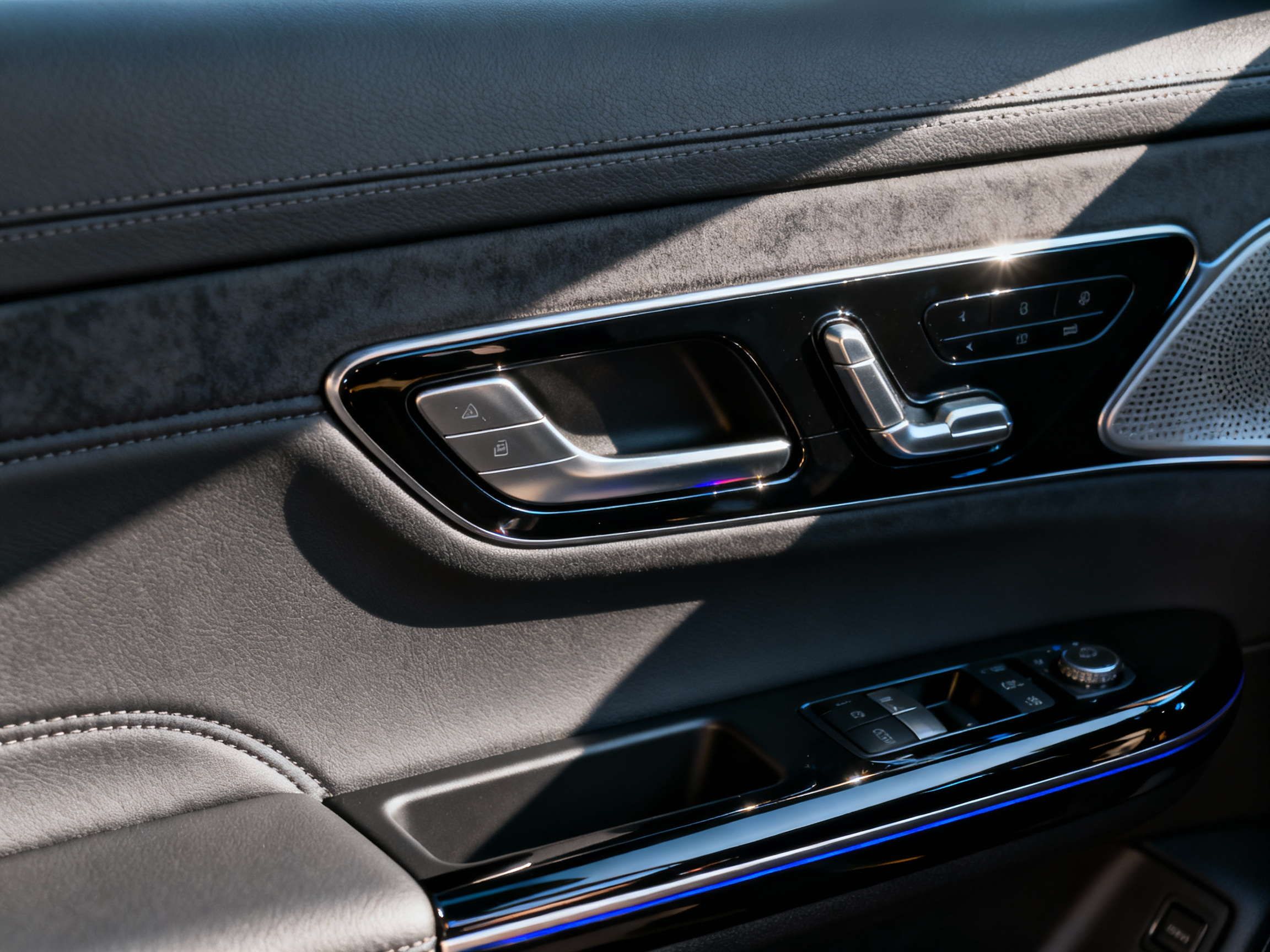
In the competitive landscape of the automotive injection molding sector, manufacturers face a dual challenge: delivering flawless Class A aesthetic surfaces while relentlessly reducing vehicle weight and production costs. Traditional approaches often rely on secondary painting or plating to achieve high-gloss “piano black” finishes or metallic textures, which significantly increases cycle times and volatile organic compound (VOC) emissions. Advanced manufacturing strategies, specifically Rapid Heat Cycle Molding (RHCM) and micro-cellular foaming, now allow engineers to produce high-performance components with premium finishes directly from the mold.
Mastering Surface Quality with Rapid Heat Cycle Molding (RHCM)
This section explores how dynamic temperature control eliminates surface defects and weld lines, enabling paint-free, high-gloss aesthetics for automotive interiors and exteriors.
Optimizing Thermal Dynamics for Flawless Finishes
Rapid Heat Cycle Molding (RHCM), also known as Variotherm technology, revolutionizes the production of aesthetic parts by dynamically varying the mold temperature during the injection cycle. Unlike conventional plastic injection molding automotive industry processes that maintain a constant temperature, RHCM rapidly heats the mold cavity surface to a temperature near the resin’s glass transition point before injection. This prevents the formation of a frozen skin layer during the filling phase, effectively eliminating weld lines, flow marks, and silver streaks.
For applications requiring deep black, high-gloss finishes—such as center console panels or pillar trims—RHCM ensures superior surface replication of the mold texture. By maintaining high fluidity during filling, the polymer can perfectly mirror the polished steel surface, achieving gloss levels comparable to painted parts without the environmental footprint of spray painting. Furthermore, the uniform heating reduces internal residual stresses in complex geometries, enhancing the dimensional stability of the component.
Engineering Molds for Cycle Efficiency and Defect Reduction
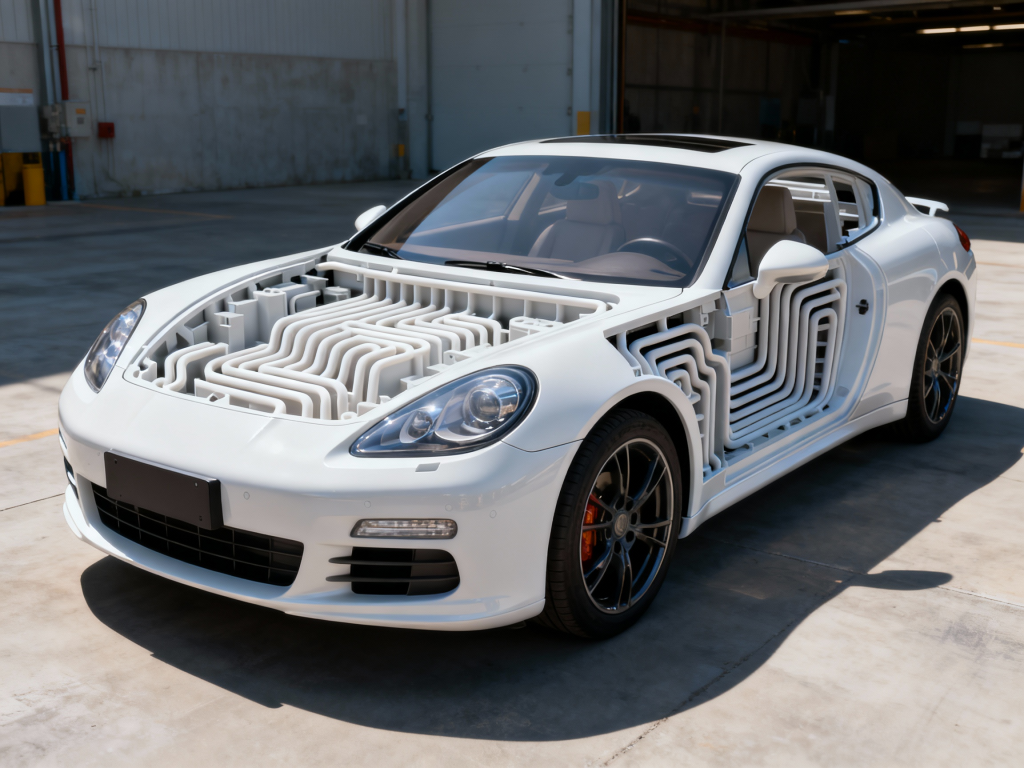
To maximize the benefits of RHCM, the automotive injection mold must be engineered with advanced cooling systems. Traditional drilled cooling lines often fail to remove heat uniformly from complex contours, leading to warpage. The integration of conformal cooling channels, manufactured via metal 3D printing (Direct Metal Laser Sintering), allows cooling lines to follow the exact topography of the part.
Data indicates that conformal cooling can reduce cooling times by 20% to 40% compared to standard baffles and bubblers. This efficiency is critical when offsetting the heating time required in the RHCM process. Additionally, using Electro-Slag Remelting (ESR) steel ensures the mold core achieves a mirror-polish finish without inclusions, vital for defect-free optical parts or high-gloss bezels.
Lightweighting and Functional Integration in Automotive Components
This section examines how micro-cellular foaming and multi-material strategies reduce part weight without compromising structural integrity or haptic performance.
Leveraging Micro-Cellular Technology for Structural Gains
As the industry shifts towards electric vehicles (EVs), lightweighting becomes paramount for extending range. Micro-cellular foaming technology (such as MuCell) involves injecting a supercritical fluid (SCF), typically nitrogen or carbon dioxide, into the molten polymer. This creates a micro-cellular structure within the part, reducing density while maintaining geometry.
Studies show that custom automotive plastic injection molding utilizing micro-cellular foaming can achieve weight reductions of 10% to 30% while maintaining stiffness-to-weight ratios. Beyond weight savings, the internal pressure generated by the foaming agent eliminates sink marks in thick-walled sections, allowing for the design of ribs and bosses on Class A surfaces without visible defects on the opposite side. This capability grants designers greater freedom to consolidate parts and reinforce structures without aesthetic penalties.
Multi-Material Strategies for Enhanced Vehicle Performance
Modern automotive interiors demand a blend of rigid structural elements and soft-touch interfaces. Multi-shot (2K) molding and insert molding enable the integration of different materials—such as bonding soft thermoplastic elastomers (TPE) onto rigid polypropylene (PP) substrates—in a single cycle. This not only improves the tactile quality of door grips and instrument panels but also eliminates manual assembly steps for seals and gaskets, improving Noise, Vibration, and Harshness (NVH) management.
Livepoint Tooling: Your Strategic Partner for Automotive Mold Excellence
Livepoint Tooling delivers IATF 16949 certified precision mold manufacturing, offering comprehensive solutions from prototype to high-volume production for global automotive OEMs.
Proven Expertise in High-Precision Manufacturing
With over 23 years of experience, Livepoint Tooling has established itself as a premier automotive injection molding supplier, specializing in complex tooling solutions for interior, exterior, and new energy vehicle components. The company leverages advanced capabilities, including multi-cavity molds, 2K double-color molding, and insert molding, to meet the rigorous demands of the automotive sector. Livepoint’s in-house engineering team utilizes full 3D simulation to optimize gate locations and cooling layouts, ensuring zero-defect production for safety-critical parts like EV battery housings and airbag covers.
By integrating rigorous quality control systems with state-of-the-art CNC machining and EDM processing, Livepoint ensures every mold meets tight tolerances of ±0.01mm. Whether your project requires high-gloss interior trims or durable under-the-hood components, Livepoint provides the technical expertise and manufacturing scalability to accelerate your time-to-market.
